
A letter to the editor in the New England Journal of Medicine from notable researchers at Memorial Sloan Kettering reported a case of complete remission of metastatic melanoma in a patient treated with single doses of ipiliumab and nivolumab.

A letter to the editor in the New England Journal of Medicine from notable researchers at Memorial Sloan Kettering reported a case of complete remission of metastatic melanoma in a patient treated with single doses of ipiliumab and nivolumab.
The anti-PDL1 agent, atezolizumab (MPDL3280A) may effectively shrink tumors in patients with locally advanced or metastatic urothelial bladder cancer in the second-line setting, according to a statement from the immunotherapy’s developer, Genentech.

Data from a phase I/II single-arm trial of the NY-ESO-1 T-Cell Receptor (TCR) therapy, recently published in Nature Medicine, is the first to show feasibility and antitumor responses in patients who have multiple myeloma.
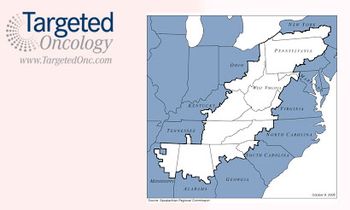
Major disparities in compliance, follow-up, and access have been identified in the Appalachian region of the United States, according to researchers from the University of Virginia School of Medicine.

Nivolumab (Opdivo) was recently approved by the European Commission as a treatment for patients who have locally advanced or metastatic squamous non-small cell lung cancer (NSCLC), following prior chemotherapy, based on findings from the phase III Checkmate-017, as well as the phase II Checkmate-063 trials.

A recent combined analysis of the BOLERO-1 and -3 studies showed that PIK3CA mutations and low/no expression of PTEN linked to an extension in progression-free survival (PFS) for patients who have metastatic HER2-positive breast cancer and are treated with a combination of everolimus, trastuzumab, and paclitaxel.

An independent panel has halted the phase III CheckMate-025 trial after determining that nivolumab (Opdivo) improved overall survival versus everolimus (Afinitor) in patients with advanced renal cell carcinoma.

Results from the phase III METEOR study showed that treatment with cabozantinib (Cometriq) improved progression-free survival (PFS) and overall survival (OS) compared with everolimus (Afinitor) in previously treated patients with metastatic renal cell carcinoma (mRCC).

According to findings from a phase II study released by Amgen, monotherapy with blinatumomab (Blincyto) showed promising complete remission (CR) or CR with partial hematological recovery (CRh) rates in adult patients with relapsed or refractory Philadelphia chromosome-positive (Ph+) B cell precursor acute lymphoblastic leukemia (ALL).

The immunotherapy DPX-Survivac has been granted orphan drug designation as treatment ovarian cancer, based on early-phase research showing a robust immune response with the therapy in combination with low-dose cyclophosphamide.

Ginseng polysaccharides may affect the balance of T-helper cells in patients with non-small cell lung cancer.
Using treatments that target epigenetic pathways, including the DNA methyltransferase inhibitor decitabine and the histone deacetylase (HDAC) inhibitor panobinostat, investigators hoped to improve the sensitivity of melanoma cells to the alkylating agent temozolomide.

Takeda released a statement saying that a new drug application was submitted for ixazomib (MLN9708), an oral proteasome inhibitor, used in combination with lenalidomide and dexamethasone, as a treatment for patients with relapsed and/or refractory multiple myeloma.

Specific areas in the US may be at health risk due to limited access of specialized gynecologic cancer care.

Gefitinib (Iressa) was recently approved by the FDA for the frontline treatment of patients who have metastatic, EGFR-positive non-small cell lung cancer (NSCLC) with an exon 19 deletion or exon 21 (L858R) substitution.
This case-based program is designed to educate medical oncologists, surgical oncologists, radiation oncologists, hem-oncs, and other allied health professionals on updates on new and emerging therapies for neuroendocrine tumors.

Research may hasten the effort to determine which strains of cancer will eventually become resistant to chemotherapy, paving the way for developing more effective targeted treatments.
The approval of necitumumab, combined with gemcitabine and cisplatin for the first-line treatment of patients who have locally advanced or metastatic squamous non-small cell lung cancer (NSCLC), was supported by FDA’s Oncologic Drugs Advisory Committee (ODAC).

The cancer drug, FY26, has demonstrated high potency and efficacy compared with cisplatin and other platinum-based chemotherapies

Researchers from Saint Louis University have developed a new class of anticancer drugs that potently reduce tumor growth and survival by targeting two energy sources, the Warburg effect (glycolysis) and lipogenesis.

Infusions of CTL019, a CAR-modified T-cell therapy against CD19, achieved durable responses and showed an acceptable safety profile in heavily pretreated patients with CD19-positive DLBCL, MCL, and FL.

The survival benefit observed with regorafenib over placebo in Asian patients who had been previously treated for mCRC in the international phase III CORRECT trial was confirmed by the phase III CONCUR trial.

An ongoing randomized trial in triple-negative breast cancer (TNBC) is evaluating the safety and efficacy of an antibody-drug conjugate that targets glycoprotein NMB (gpNMB), which is associated with reduced metastasis-free and overall survival.

A study, by M. Cecilia Cano, PhD, et al at the Wistar Institute, Philadelphia, has shown that monotherapy treatment with PI3K inhibitors may worsen a patient’s cancer by causing more aggressive tumor cell behavior and increasing the likelihood of metastases to other organs.

Clovis Oncology has initiated the rolling submission process for rociletinib in EGFR T790M-positive advanced non–small cell lung cancer following prior treatment with a TKI.

The FDA has extended the review timeline for the combination of cobimetinib and vemurafenib in advanced melanoma by 3 months, to allow ample time to review updated data that were presented at the 2015 ASCO Annual Meeting.

An independent data safety and monitoring board has recommended continuation of the phase III ACT IV clinical trial of rindopepimut (Rintega) in patients with newly diagnosed glioblastoma multiforme.

CPX-351 demonstrated a complete response (CR) or CR with incomplete hematologic recovery rate of 47.7% in elderly patients with untreated secondary acute myeloid leukemia.
In a landmark 6 to 3 vote, the US Supreme Court has upheld a pivotal provision of the Patient Protection and Affordable Care Act (PPACA) that provides subsidies to individuals in the federally facilitated marketplace.

The FDA has granted a priority review designation to a new drug application for MM-398 in combination with 5-fluorouracil and leucovorin as a treatment for patients with metastatic pancreatic cancer following a gemcitabine-based regimen.