

The risk of death for patients with advanced renal cell carcinoma (RCC) was reduced by 27% with nivolumab (Opdivo) versus everolimus (Afinitor), and overall survival (OS) was improved by 5.4 months.

The risk of death for patients with advanced renal cell carcinoma (RCC) was reduced by 27% with nivolumab (Opdivo) versus everolimus (Afinitor), and overall survival (OS) was improved by 5.4 months.

Malignant melanoma is one of the most common primary tumors to spread to the brain.

Dabrafenib (Tafinlar), in combination with trametinib (Mekinist), improved overall survival (OS) by 7.6 months, compared to the single-agent vemurafenib (Zelboraf) in patients who have unresectable or metastatic BRAFV600E/K-mutant melanoma.

Compared with everolimus, second-line treatment with cabozantinib (Cometriq) reduced the risk of progression or death by 42% in patients with advanced renal cell carcinoma (RCC)

Failure-free survival (FFS) for patients with follicular lymphoma has had a lack of improvement, fueling interest in new treatment strategies that may offer promise for better outcomes.

Single-agent ibrutinib (Imbruvica) data showed durable responses in patients with untreated or relapsed/refractory chronic lymphocytic leukemia (CLL).

New combination strategies are required for heterogeneity of mantle cell lymphoma (MCL), in order to improve outcomes.

Clinical evaluation suggests a role for immune checkpoint inhibition in the treatment of patients with lymphomas, but early success has also raised many questions.

A sarcoma study arm of the phase II portion of the multiarm PembroPlus clinical trial that combines immunotherapy with chemotherapy has commenced at Cancer Treatment Centers of America (CTCA), Western Regional Medical Center, Goodyear, Arizona

The Inaugural International Cancer Immunotherapy Conference commenced September 16, 2015, in New York City, and one presentation detailed Biothera's new biomarker strategy in patient selection for the company's investigational cancer immunotherapy, Imprime PGG.

Frequency of the cell death-regulating protein Bim (BCL-2-interacting mediator of cell death) may predict patient response to PD-1 inhibitor immunotherapy.

The oral nucleoside TAS-102 (Lonsurf) has been approved by the FDA for patients with advanced colorectal cancer (CRC) who are not responding to other treatments.

Carfilzomib (Kyprolis) in combination with dexamethasone, was recently granted a priority review designation by the FDA for patients who have relapsed multiple myeloma, following prior treatment with at least one therapy.

Oncoviruses have been implicated to cause 17.8% of human cancers.

The bovine leukemia virus, or BLV, which is transmitted between cattle herds may play a key role in the development of breast cancer.
Researchers from United States and Ireland have formed a partnership to advance nanoparticle-based delivery systems that would not only drive sustained-release of cytotoxic agents, but could improve penetration of these treatments within the tumor and allow them to continue working for days or weeks.

AbbVie has submitted a supplemental new drug application for its BTK inhibitor ibrutinib (Imbruvica) as a therapy for treatment-naive patients with chronic lymphocytic leukemia (CLL) who are over the age of 65.
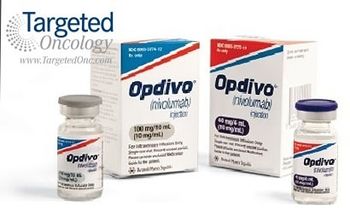
The PD-1 inhibitor immunotherapy Nivolumab (Opdivo) has received an FDA breakthrough therapy designation for the treatment of patients with advanced renal cell carcinoma.

An experimental immunotherapy for human papillomavirus-, or HPV-, related throat cancers, which is driven by the Listeria bacteria (that wreaks havoc when ingested), may now move forward.
Abstracts highlighting the latest clinical data on lenvatinib are expected at the 2015 European Cancer Congress in Vienna, Austria.

The attenuated vaccinia virus, GL-ONC1, demonstrated safety and clinical benefit when delivered intravenously with concurrent chemoradiation therapy in patients who have locoregionally advanced head and neck carcinoma (LA-HNC).

A novel trap and detection system in preclinical trials may leverage advances in the detection of circulating tumor cells (CTCs) to find and stop metastatic cancer cells from spreading.

Ixazomib (MLN9708), an oral proteasome inhibitor, was recently granted a priority review designation by the FDA, in combination with lenalidomide and dexamethasone for the treatment of patients who have relapsed and/or refractory multiple myeloma.
Administering 6 cycles of docetaxel at the beginning of androgen-deprivation therapy (ADT) to patients with metastatic, hormone-sensitive prostate cancer (mHSPC) resulted in a significantly longer overall survival (OS) than ADT alone.

A paper published in the Journal of Clinical Oncology, authored by Tosoian et al, reports on the long-term outcomes of prospective active surveillance (AS) of patients with favorable-risk prostate cancer.

Radium-223 dichloride (Xofigo) has shown a significant survival advantage in the treatment of patients with metastatic castration-resistant prostate cancer (mCRPC) who have symptomatic bone metastases, and a multidisciplinary approach to treatment has become more widely practiced in community clinics.

The FDA recently granted alectinib a priority review designation for patients who have ALK-positive, locally advanced or metastatic non-small cell lung cancer (NSCLC) and progressed or are intolerant to crizotinib (Xalkori).

A novel immunotherapy, EGEN-001, combined with pegylated liposomal doxorubicin (PLD) has demonstrated clinical benefit in recurrent or persistent epithelial ovarian, fallopian tube, or primary peritoneal cancer patients.

The fully human PD-L1 IgG1 antibody, avelumab, demonstrated clinical activity in patients who have previously treated, recurrent/refractory (R/R) ovarian cancer.

Results of the CHORUS trial confirm the noninferiority of primary chemotherapy followed by surgery versus primary surgery and then chemotherapy, and show that performing chemotherapy first is associated with less morbidity and mortality in patients with newly diagnosed, advanced ovarian cancer.