

While results from ongoing trials with atezolizumab, pembrolizumab, nivolumab, and avelumab in bladder cancer are eagerly awaited, there is one subset of patients who require special attention - patients with upper tract urothelial cancer (UTUC).

While results from ongoing trials with atezolizumab, pembrolizumab, nivolumab, and avelumab in bladder cancer are eagerly awaited, there is one subset of patients who require special attention - patients with upper tract urothelial cancer (UTUC).

Talimogene laherparepvec (T-VEC; Imlygic) has been approved by the European Comission as a treatment for adult patients with unresectable stage IIIb, IIIc, and IVM1a melanoma that has not spread to the bone, brain, lung, or other viscera, based on the phase III OPTiM study.
A data metaanalysis supports the potential correlation between NAT2 slow acetylation and the risk of bladder cancer.

A high number of clinically relevant genomic alterations (CRGAs) were found in patients with advanced urothelial carcinoma (UC) using a comprehensive genomic profile (CGP).

Expanded approval for single-agent pembrolizumab (Keytruda) has arrived from the FDA to include frontline treatment for advanced melanoma regardless of BRAF status, based on a substantial improvement in progression-free and overall survival compared with ipilimumab (Yervoy) in the phase III KEYNOTE-006 trial

Urologists face a challenge in delineating the optimal sequence of treatment more and more as the goal for treating prostate cancer moves toward greater use of targeted therapies. While these treatment eradicate disease, urologists must minimize the risk of adverse events.

With a renewed armory of treatments consisting heavily of immunotherapies, urologists can employ new paradigms of treatment for patients with metastatic castration-resistant prostate cancer (mCRPC).

Patients with newly-diagnosed glioblastoma who received treatment with tumor- treating electrical fields in addition to temozolomide had nearly double the two-year survival of those who received temozolomide alone, according to an article published in the Journal of the American Medical Association.

Researchers discovered that pregnancy while in remission of Hodgkin lymphoma does not increase the risk of cancer relapse, making this report the first largest study to specifically examine the impacts of pregnancy as a potential trigger for relapse in Hodgkin lymphoma survivors.

The review period for rociletinib for EGFR T790M-positive non-small cell lung cancer (NSCLC) has been extended by the FDA by 3 months. The extension allows ample time to review additional data submitted by the drug's developer, Clovis Oncology.

The phase III PILLAR trial studying the novel immunotherapy, algenpantucel-L combined with chemotherapy in patients with locally advanced, unresectable pancreatic cancer, has completed enrollment with over 300 patients.

Recent results from a survey of some 7000 patient specimens from the Cancer Genome Atlas concluded that gene fusion events, resulting in oncogenic activation, were commonly observed among members of the neurotrophic tyrosine receptor kinase family, with 23 gene fusions observed over a total of 9 different tumor types, including colorectal cancer.
Pembrolizumab, a PD-1 inhibitor, had an overall response rate of 12% in patients with PD-L1-positive, ER+/HER2 advanced breast cancer, according to data from the phase Ib KEYNOTE-028 trial.

Neratinib continued to show similar rates of disease-free survival for patients with HER2-positive early-stage breast cancer, according to a 3-year exploratory analysis of the ExteNET trial.

A team of researchers with the University of Texas MD Anderson Cancer Center found that adjuvant chemotherapy has a significant impact on patient survival, especially in patients with triple-negative breast cancer.

Uridine triacetate (Vistogard) has been given a green light by the FDA to treat adult and pediatric patients who have severe or life-threatening toxicities within 4 days of treatment following an overdose of 5-fluorouracil (5-FU) or capecitabine.
Alectinib has been granted accelerated approval by the FDA in patients with metastatic ALK-positive non-small cell lung cancer (NSCLC) following progression on crizotinib.

Palbociclib (Ibrance) has been given a priority review by the FDA. The treatment will be looked at as a combination with fulvestrant in pretreated patients with HR-positive, HER2-negative metastatic breast cancer, said Pfizer, the manufacturer of the CDK 4/6 inhibitor.
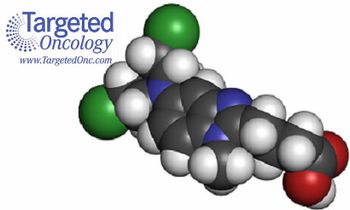
A rapid infusion formulation of bendamustine (Bendeka) has received FDA approval for the treatment of patients with CLL or indolent B-cell NHL that has progressed during or within 6 months of treatment with rituximab or a rituximab-containing regimen.

Implementation of the Affordable Care Act (ACA) may have helped increase the number of women whose cases of cervical cancers were found and treated early, according to a study published in JAMA.

Ovarian cancer outcomes appear to be improved in women with a history of oral contraceptive use, according to a retrospective study recently published in BMC Cancer.
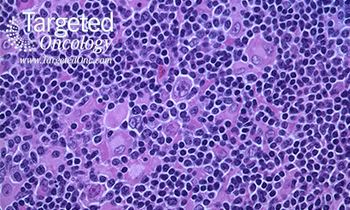
In this review, our authors discuss the mechanism of action and clinical development of various checkpoint inhibitors in lymphoma.

Leonard Saltz, MD, discusses VEGF inhibitors, their history and why oncologists might be overestimating the treatment.

The FDA has granted a priority review for a supplemental new drug application for crizotinib (Xalkori). The indication is for patients with ROS1-positive metastatic non-small cell lung cancer (NSCLC).

A new study from the University of California, Los Angeles shows that less than 5% of men who opt for active surveillance of their low-risk prostate cancer receive the proper amount of monitoring.

Living a healthier lifestyle could be a robust preventative measure against metastatic prostate cancer. One new study suggests that leading a healthy lifestyle could reduce a man's chances of developing the cancer by up to 68%.

Recent studies suggest that RP may be a better initial treatment given many of these patients require multimodal therapy to manage their disease. The question about radiation versus surgery lies in the details, with treatment tailored to each patient.

Rindopepimut is the first immunotherapy to have ever shown a survival benefit in brain cancers, specifically glioblastoma, said David Reardon, MD.

A combination of the anti-PD-L1 immune checkpoint inhibitor durvalumab with the anti-CTLA-4 monoclonal antibody tremelimumab showed improved tumor response in patients with advanced NSCLC.
The PD-1 inhibitors pembrolizumab and nivolumab should be considered for all patients with advanced NSCLC, said Roman Perez-Soler, MD.