

ASCO named the improved outlook for patients with chronic lymphocytic leukemia (CLL) as its inaugural “Cancer Advance of the Year.â€

ASCO named the improved outlook for patients with chronic lymphocytic leukemia (CLL) as its inaugural “Cancer Advance of the Year.â€

The New York State Stem Cell Science Program recently awarded a 4-year $11.9 million grant to Roswell Park Cancer Institute to fund research and development of a stem-cell based treatment for ovarian cancer.

The start of 2015 brought news from Novartis that it had signed an agreement with Intellia Therapeutics and Caribou Biosciences to license its proprietary CRISPR/Cas9 gene editing platform to develop novel treatments for chronic genetic-based diseases.
Nivolumab (Opdivo) improved survival compared with docetaxel in patients with pretreated squamous cell non–small cell lung cancer (NSCLC) in the phase III CheckMate-017 trial, according to Bristol-Myers Squibb (BMS), which manufactures the drug.

One of the leading non-clinical attributes that affect how oncologists decide which therapeutic agent to prescribe over another is patient affordability.

In a unanimous 14-0 vote, the FDA’s Oncologic Drugs Advisory Committee (ODAC) recommended the approval of EP2006, a biosimilar version of filgrastim (Neupogen; Amgen).

Langerhans cell histiocytosis (LCH) and Erdheim-Chester disease (ECD) are characterized by a high frequency of BRAFV600E mutations, which are responsive to treatment with BRAF inhibitors such as vemurafenib.

Amgen and Kite Pharma have announced that they will collaborate on the development of novel CAR T-cell immunotherapies, with Amgen providing cancer targets and Kite offering its engineered autologous cell therapy platform.

The FDA approved nivolumab for patients with advanced melanoma in December 2014, joining 6 other melanoma treatments approved in the past 3 years, including monoclonal antibodies pembrolizumab and ipilimumab.

A bundled payment model may signal the expansion of cost reforms in oncology treatment.

Researchers will dissect topline results from the MARIANNE trial in an effort to understand why T-DM1 failed to triumph as a first-line treatment in the metastatic setting for patients with advanced HER2-positive breast cancer despite the promise of earlier findings.
The FDA has approved nivolumab (Opdivo) for patients with unresectable or metastatic melanoma following treatment with ipilimumab or a BRAF inhibitor, based on data from the phase III CheckMate-037 trial.

The FDA has approved the PARP inhibitor olaparib (Lynparza) for the treatment of women with BRCA-positive advanced ovarian cancer.

Two HER2-targeting regimens anchored by T-DM1 failed to outperform the standard strategy in women with previously untreated advanced HER2-positive breast cancer, dealing a blow to efforts to move the drug into frontline settings.

The somatostatin analog lanreotide has gained FDA approval as a treatment for patients with unresectable, well or moderately differentiated, locally advanced or metastatic gastroenteropancreatic neuroendocrine tumors.
The FDA has approved the VEGFR-2 inhibitor ramucirumab (Cyramza) in combination with docetaxel for the treatment of patients with metastatic non-small cell lung cancer (NSCLC) whose tumor has progressed during or following treatment with platinum-based chemotherapy.

Xgeva (denosumab) has received approval from the US Food and Drug Administration (FDA) for the treatment of hypercalcemia of malignancy (HCM) refractory to bisphosphonate therapy, and the agent was granted Orphan Drug Designation.

The FDA has approved ruxolitinib as a treatment for patients with polycythemia vera who are resistant or intolerant to hydroxyurea
The anti-CD19 immunotherapy blinatumomab (Blincyto) has been approved by the FDA as a treatment for patients with Philadelphia chromosome-negative relapsed/refractory B-precursor acute lymphoblastic leukemia (ALL), based on findings from a phase II trial.

Pfizer and Merck KGaA will collaborate on the development of the PD-L1 inhibitor MSB0010718C as a potential treatment for multiple types of cancer, according to the companies.
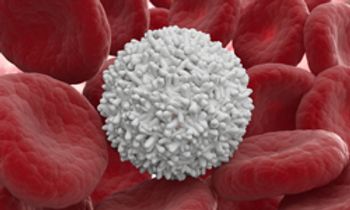
The FDA has granted the chimeric antigen receptor (CAR) T cell therapy JCAR015 a breakthrough therapy designation as a treatment for patients with relapsed or refractory B-cell acute lymphoblastic leukemia (ALL).

Checkpoint inhibition has demonstrated efficacy for the treatment of melanoma in several clinical trials. However, biomarkers to predict safety and efficacy of immunotherapies in individual melanoma patients are lacking.

Ongoing clinical trials are evaluating a new immunotherapeutic approach for the treatment of malignant melanoma–the combination of an oncolytic virus with checkpoint inhibition.

MM-398 (nal-IRI) plus 5-fluorouracil (5-FU) and leucovorin received a Fast Track designation from the FDA as a second-line treatment for patients with metastatic pancreatic cancer.

As its CAR T cell and high-affinity TCR products continue to advance in clinical trials, Juno Therapeutics, Inc, filed a registration statement for an initial public offering (IPO) of its common stock on November 17.

Knowledge of genetic expression of melanocytic lesions significantly reduced the number of indeterminate diagnoses made by dermatopathologists.

Pembrolizumab (Keytruda) significantly improved progression-free survival (PFS) by over 43% compared with chemotherapy as a treatment for patients with metastatic melanoma who were refractory to ipilimumab (Yervoy).

Frontline treatment with nivolumab (Opdivo) significantly extended overall survival (OS) and progression-free survival (PFS) when compared with dacarbazine in patients with untreated BRAF wild-type advanced melanoma.

Several novel approaches to the delivery of therapeutics for advanced melanoma may improve treatment efficacy and patient survival.

The monoclonal antibody cirmtuzumab, currently in clinical trials to treat CLL, targets ROR1 on the surface of cancerous B cells, and the agent may have a wider reach in the treatment of ovarian and other cancers.