
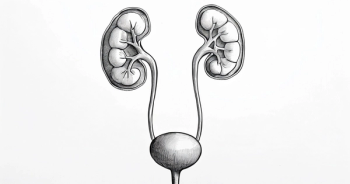
Explore the latest advancements in muscle-invasive bladder cancer treatment, including immunotherapy and novel therapies enhancing patient outcomes.

Explore the latest advancements in muscle-invasive bladder cancer treatment, including immunotherapy and novel therapies enhancing patient outcomes.

Emerging CAR T-cell therapies, like DuoCAR20.19.22-D95, show promise in overcoming challenges in treating relapsed B-cell malignancies.

Discover the latest oncology breakthroughs, including FDA approvals, promising trials, and advancements in cancer treatment strategies for improved patient outcomes.

Explore the latest advancements in DLL3-targeted therapies for small cell lung cancer, showcasing promising trial results and treatment options.

During a live event, Nizar M. Tannir, MD and participants discussed how they think ahead to later lines of therapy when choosing frontline regimens for advanced renal cell carcinoma.

Mitazalimab shows promising efficacy and safety in metastatic pancreatic cancer, paving the way for a pivotal phase 3 trial.
Michael Cole shares his decade-long battle with malignant pleural mesothelioma, highlighting treatment choices, resilience, and the vital doctor-patient relationship.

Combination therapy with relatlimab and nivolumab enhances treatment-free survival in advanced melanoma, offering promising outcomes over monotherapy.
Adoptive cell therapy with tumor-infiltrating lymphocytes shows promise for advanced melanoma patients unresponsive to existing treatments, offering tailored immunotherapy options.

Petros Grivas, MD, PhD, discusses how the JAVELIN Bladder 100 trial established avelumab as standard maintenance therapy for advanced bladder cancer.

FDA lifts REMS program for vandetanib, affirming safety in thyroid cancer treatment as healthcare providers ensure effective heart rhythm monitoring.

During a live event, Ann F. Mohrbacher, MD, reviewed treatment options for a patient with early relapsed diffuse large B-cell lymphoma.
The FDA approves imlunestrant, offering a new oral treatment option for advanced ER-positive breast cancer, enhancing patient outcomes and management.

Daratumumab-based regimens show significant clinical benefits for newly diagnosed, transplant-ineligible multiple myeloma patients, regardless of frailty changes.

New clinical data reveals stenoparib significantly extends survival in advanced platinum-resistant ovarian cancer, offering hope for patients with limited options.
Iberdomide combined with daratumumab and dexamethasone shows promising results in improving MRD negativity rates for relapsed multiple myeloma patients.
Luke Fletcher, MD, reviews updates in anemia-predominant MDS and the 2025 polling results from MDS Case-Based Roundtable events.
Oncologists explore advanced treatment options for ROS1-positive non-small cell lung cancer, highlighting improved efficacy and personalized therapy choices.
IMNN-001 shows promising results in enhancing the tumor microenvironment and improving survival rates in advanced ovarian cancer treatment.

A subanalysis of the VERSATILE-002 study highlights significant survival benefits for HNSCC patients with low PD-L1 expression using PDS0101 and pembrolizumab.
FDA prioritizes review of T-DXd for first-line HER2-positive breast cancer treatment, showcasing significant survival benefits in recent studies.

Discover the latest advancements in lymphoma treatment, including innovative therapies and personalized medicine, enhancing patient outcomes and quality of life.

During a live event, Adriana Rossi, MD, discussed easing CAR T-cell therapy access and highlighted cilta-cel's efficacy in earlier-line myeloma.

The evERA study reveals promising results for giredestrant in treating advanced ER-positive breast cancer, enhancing progression-free survival for patients.
Research explores innovative treatments for high-risk smoldering multiple myeloma, highlighting promising results from the bispecific antibody linvoseltamab.
New research highlights the promising combination of tarlatamab and checkpoint inhibitors, showing improved survival rates in extensive-stage small cell lung cancer patients.
The FDA approves a new diagnostic kit for identifying acute leukemia patients eligible for the groundbreaking Menin inhibitor, revumenib.
Roy S. Herbst discusses advancements in EGFR-targeted therapies for early-stage NSCLC, highlighting improved survival rates and the role of molecular residual disease.

During a live event, Steven I. Robinson, MBBS, discussed guideline-concordant active surveillance and systemic therapies for managing desmoid tumors.