
Guillermo Garcia-Manero, MD, provides advice to community oncologists on the treatment of anemia for patients with lower-risk MDS.

Guillermo Garcia-Manero, MD, provides advice to community oncologists on the treatment of anemia for patients with lower-risk MDS.
An expert on lower-risk MDS discusses how the treatment of anemia is evolving as newer therapies enter the treatment landscape.
A medical oncologist outlines approaches to treating anemia in patients with lower-risk myelodysplastic syndromes.
Dr Garcia-Manero offers insights on the adverse events profile associated with luspatercept in patients with lower-risk MDS.
Guillermo Garcia-Manero, MD, addresses clinical research investigating luspatercept dose titration practices in patients with lower-risk MDS.
A medical oncology specialist discusses how recent data and improvements in genomic profiling are changing the classification of lower-risk MDS.
Guillermo Garcia-Manero, MD, reviews recent results from the COMMANDS study investigating luspatercept versus epoetin alfa in patients with ESA-naïve, transfusion dependent LR-MDS.
An expert on the treatment of lower-risk MDS outlines practices for identifying patients who are suitable to receive erythroid maturating agents for treatment of anemia.
A medical oncologist discusses standard-of-care treatment practices for patients with lower-risk myelodysplastic syndromes.
Neel Bhatt, MBBS, MPH, discusses a study exploring long-term quality of life outcomes of patients who underwent stem cell transplantation for aplastic anemia.

Matthew Hadfield, DO, discusses his interest in immunotherapy and the toxicities associated with them.
The panelists compare the adverse event profiles of immunotherapy combination (IO/IO) versus immunotherapy plus tyrosine kinase inhibitor (IO/TKI) regimens, and address the economic implications of managing long-term side effects.
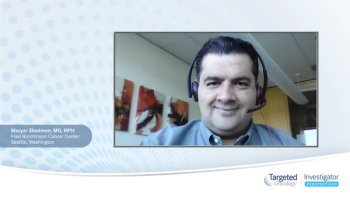
Following recent updates from the SEQUOIA Arm D and CAPTIVATE studies, Mazyar Shadman, MD, MPH, discusses the future implications of fixed-duration therapy for patients with CLL/SLL.
An expert on hematologic malignancies discusses the ongoing CAPTIVATE trial evaluating ibrutinib plus venetoclax in patients with treatment-naïve CLL/SLL.

Daniel Rubin, PharmD, discusses key takeaways from a study exploring the use. of a clinical decision tool for biomarker documentation.

Taiga Nishihori, MD, discusses a study in which investigators evaluated patients with relapsed/refractory multiple myeloma who were hospitalized and treated with commercial ciltacabtagene autoleucel at Moffitt Cancer Center between May 2022 and May 2023.

Vincent Law, research associate at Moffitt Cancer Center, discusses the key takeaways and implications of this research.

Corey Cutler, MD, MPH, and Hannah Choe, MD, provide future perspectives on the development of axatilimab for patients with chronic GVHD.

Alexandra Gomez Arteaga, MD, discusses the rationale behind a retrospective study comparing Orca-T with posttransplant cyclophosphamide-based hematopoietic cell transplantation.
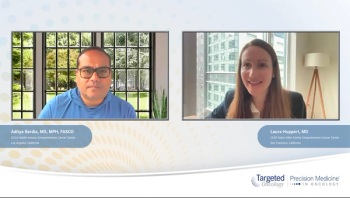
Laura Huppert, MD, and Aditya Bardia, MD, MPH, FASCO, provide closing thoughts on the evolving treatment landscape for HER-negative and HER2-low metastatic breast cancer.
A blood cancer specialist discusses the latest data from the SEQUOIA Arm D trial investigating zanubrutinib plus venetoclax in treatment-naïve patients with CLL and del(17p) and/or TP53 mutations.
Mazyar Shadman, MD, MPH, describes his clinical approach to treating patients with high-risk CLL/SLL, including those with or without del(17p) or TP53 mutations.
The key opinion leaders share their strategies for selecting systemic therapy, comparing immunotherapy combination (IO/IO) versus immunotherapy plus tyrosine kinase inhibitor (IO/TKI) approaches, for previously untreated patients with advanced renal cell carcinoma.
Medical experts specializing in clear cell renal cell carcinoma examine the concept of treatment-free survival in immunotherapy/tyrosine kinase inhibitor (IO/TKI) regimens, addressing both the advantages and potential drawbacks.

Francis P. Worden, MD, discusses future plans to investigate combination therapies and other novel treatments in the thyroid cancer space.

Barbara O'Brien, MD, discusses the goals and results of a study investigating tucatinib, trastuzumab, and capecitabine for the treatment of leptomeningeal metastases in patients with HER2-positive breast cancer.
Elias Jabbour, MD, provides an overview of the significance of the FDA approval of ponatinib plus chemotherapy for the treatment of adult patients with newly diagnosed Philadelphia chromosome-positive acute lymphoblastic leukemia.
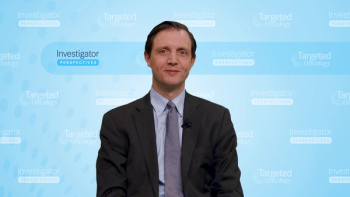
Martin H. Voss, MD, discusses the trajectory of the advanced renal cell carcinoma treatment landscape and provides clinical advice to community oncologists.