Casey M. Cosgrove, MD, discusses research exploring precision medicine concepts for endometrial cancer treatment.

Casey M. Cosgrove, MD, discusses research exploring precision medicine concepts for endometrial cancer treatment.
Casey M. Cosgrove, MD, discusses biomarker-guided treatment for endometrial cancer.
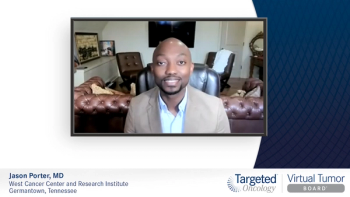
Dr Jason Porter introduces three recent retrospective observational studies on use of biomarker testing in mNSCLC, which identified racial and socioeconomic disparities in testing patterns.
Panelists continue their dialogue on common challenges and barriers to use of biomarker testing in NSCLC, and share potential strategies to optimize use of testing.
Lori Leslie, MD, discusses ongoing clinical trials that are exploring chimeric antigen receptor T-cell therapy for the treatment of B-cell malignancies.
An expert on graft-vs-host disease provides an overview of GVHD prophylaxis and conditioning regimens prior to transplant.
Yi-Bin Chen, MD, an expert clinician and researcher, reviews a case study of a patient with GVHD and offers his initial impressions.
Gene G. Finley, MD, discusses some of the treatment options that have been used in the small cell lung cancer space, including intensive chemotherapies and targeted agents.

Nicholas J. Robert, MD, discusses the poster on the MYLUNG Consortium that he presented at the 2022 American Society of Clinical Oncology Annual Meeting.
Shared insight on a patient case of ALK+ non–small cell lung cancer with CNS metastasis and the role of brain MRIs in clinical practice.
Chandler Park, MD shares clinical insights regarding care for patients with renal cell carcinoma, touching on treatment selection and managing adverse effects.
Thoughtful discussion of ongoing clinical trials in the renal cell carcinoma landscape, with a particular focus on their eventual clinical implications.
Expert panelists open their discussion on ALK+ non–small cell lung cancer and reflect on the impact of CNS metastasis in this setting.
Chandler H. Park, MD, discusses the treatment landscape for advanced renal cell carcinoma and factors that influence treatment decisions.
Alexander Spira, MD, PhD, FACP, discusses the combination of amivantamab-vmjw and lazertinib for patients with relapsed or refractory EGFR-mutant non–small cell lung cancer and findings presented at the 2022 IASLC World Conference on Lung Cancer.

Drs Krina Patel and Hana Safah explain their impressions of the data on BCMA-directed CAR T-cell therapy for relapsed/refractory multiple myeloma and its potential impact on clinical practice.

Dr Sagar Lonial highlights efficacy and safety data from the KarMMA and CARTITUDE-1 clinical trials.

Lori Leslie, MD, describes the cohorts of the phase 2 ZUMA-2 study and discusses the potential impact of brexucabtagene autoleucel in the mantle cell lymphoma landscape.

Jashodeep Datta, MD, explains KRAS and TP53 co-alterations in patients with pancreatic cancer.
Dr Vail shares insight into his ideal institutional approach to biomarker testing for NSCLC, emphasizing the need for local molecular pathology expertise and available in-house biomarker panels.
Eric Vail, MD introduces a patient case, a 71-year-old Asian woman newly diagnosed with mNSCLC, followed by a focused discussion on how the panel would have approached biomarker testing and treatment initiation for the patient.

Thomas G. Martin, MD, discusses the mechanism of action of bispecific T-cell engagers including teclistamab-cqyv in patients with relapsed/refractory multiple myeloma.
An overview of the KEYNOTE-564 study design followed by an analysis of 30-month follow-up data presented at the 2022 ASCO Genitourinary Cancers Symposium.
Chandler Park, MD introduces a renal cell carcinoma (RCC) patient case, sharing his initial impressions and discussing treatment approaches.
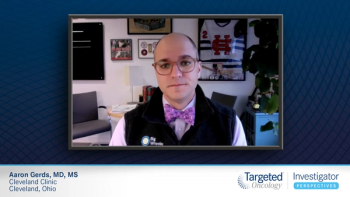
Aaron Gerds, MD, MS, offers closing remarks on the outlook for the treatment of myelofibrosis, and shares advice for community oncologists.
Brian A. Jonas, MD, PhD, discusses novel biomarkers being explored in acute myeloid leukemia, including e-selectin, which Jonas believes is very promising.

Hana Safah, MD, presents the case of a 63-year-old woman with relapsed/refractory multiple myeloma receiving treatment with a BCMA-directed CAR T-cell therapy.
Sagar Lonial, MD, FACP, reviews the design and outcomes of the DREAMM-2 and ALGONQUIN studies investigating belantamab mafodotin in the treatment of relapsed/refractory multiple myeloma.
Looking at a subgroup analysis of patients with hormone receptor-positive and HER2-negative breast cancer on endocrine therapy, researchers saw promising results but worrying disparities between non-Hispanic White patients and non-Hispanic Black patients.
Charles Geyer, MD, discusses the potential impact of adjuvant olaparib on the treatment landscape for patients with germline BRCA-mutated, HER2-negative, high-risk early breast cancer.