
Opinion|Videos|March 19, 2025
Adjuvant Anti–PD-1 Decision-Making: PD-L1 Expression, Residual Disease, and Variant Histologies
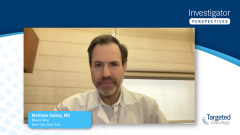
Author(s)Matthew Galsky, MD
An expert discusses how enthusiasm for adjuvant anti–PD-1 therapy varies based on key factors. Receipt of neoadjuvant chemotherapy (NAC), nodal involvement, positive margins, variant histology, and PD-L1 expression influence recommendations. Observation may be preferred in frail, elderly, or autoimmune-prone patients. muscle-invasive urothelial carcinoma (MIBC) status is critical in decision-making.
Advertisement
Episodes in this series
Video content above is prompted by the following:
- Does your enthusiasm about recommending adjuvant anti–PD-1 differ based on the following variables?
- Receipt of NAC vs not
- Nodal involvement on original imaging and/or at surgery in final path
- Positive surgical margin
- Variant histologies (squamous, plasmacytoid, micropapillary, sarcomatoid, etc)
- PD-L1 expression
- What patient specific factors influence your decision to observe/monitor, rather than treat, your patients with >pT2 or ≥ypT2 stage and/or pN+ (eg, prior autoimmune disease, frailty, age)?
- MIBC vs not
Advertisement
Related to this article

Oncologists weigh second-line options after IO/TKI failure in metastatic ccRCC, highlighting tolerability, mechanism shifts, and belzutifan’s broader role.

In the phase 3 EMBER-3 trial, imlunestrant plus abemaciclib doubled median progression-free survival vs imlunestrant alone in ESR1-mutated advanced breast cancer.

CELESTIMO trial shows mosunetuzumab plus lenalidomide boosts PFS in relapsed follicular lymphoma, supporting earlier-line outpatient, chemo-free care.

The FDA's Expedited Investigational New Drug (IND) Pilot Program pairs trial sponsors and research institutions to promote phase 1 trials in the US.

During a live event, Sikander Ailawadhi, MD, and participants considered a case patient with relapsed multiple myeloma after a quadruplet induction who declined CAR T-cell therapy.
FDA clears Triton 1 robotic colonoscopy for screening and advanced therapy, backed by first-in-human data showing high detection rates and reduced clinician workload.

Results from the phase 3 MAVERICK trial (SWOG S1827) show MRI surveillance alone improved cognitive failure-free survival vs adding PCI in SCLC.
The COPERNICUS study of amivantamab/lazertinib showed lower rates of adverse events and discontinuation with supportive care regimens in patients with EGFR-mutated non–small cell lung cancer.
Advertisement
Advertisement
Trending on Targeted Oncology - Immunotherapy, Biomarkers, and Cancer Pathways
1
FDA Approves Imlunestrant Plus Abemaciclib in ESR1-Mutated Breast Cancer
2
Data Increasingly Favor BCMA-Directed Therapy For Early-Relapse Myeloma
3
Sub-Q Amivantamab and Supportive Care Minimize Discontinuation in EGFR+ NSCLC
4
FDA Clears Robotic System for Endoscopic Procedures in the Colon
5