
Opinion|Videos|March 19, 2025
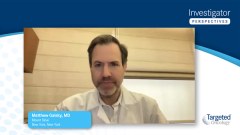
Adjuvant ICI for High-Risk MIUC: Patient Counseling
Author(s)Matthew Galsky, MD
An expert discusses how medical professionals counsel eligible patients about adjuvant immune checkpoint inhibitor (ICI) therapy by discussing its potential to reduce cancer recurrence, emphasizing the benefits in high-risk cases. They carefully assess patient eligibility, explaining potential immune-related adverse events and balancing these risks with the treatment’s potential lifesaving benefits.
Advertisement
Episodes in this series
Video content above is prompted by the following:
- How does availability of SC ICI impact treatment selection for your patients with bladder cancer? (NCCN 6.2024; Albiges 2025; Burotto 2024)
- In the advanced/metastatic setting
- In the perioperative setting
- From a practical standpoint, what potential cost and time savings could your center anticipate with SC ICI formulations?
- How might an SC option alleviate patient burden in treatment accessibility, compliance, and follow-up?
Advertisement
Related to this article

A survey of US veterans with non-muscle invasive bladder cancer identifies barriers to treatment access, care coordination challenges, and gaps in patient education.
The perioperative regimen improved event-free and overall survival in the phase 3 VOLGA trial, offering a new option for patients with muscle-invasive bladder cancer who cannot receive or decline cisplatin.

Ravi Parikh, MD, MPP, discusses the future of oncology practice, including real-world data, patient engagement, emerging technologies, and policy priorities shaping cancer care.
Updated guidance recommends biennial prostate-specific antigen testing for average-risk men aged 50 to 69 years and annual screening beginning at age 45 for higher-risk men.

The NDA was completed for first-line zipalertinib plus platinum chemotherapy in EGFR exon 20 insertion NSCLC, based on phase 3 REZILIENT3 data showing improved PFS.

Telisotuzumab adizutecan showed promising survival in pretreated nonsquamous NSCLC, with the most benefit in EGFR wild-type tumors with high c-Met levels.

During a live event, Rushang Patel, MD, PhD, and participants discussed referral timing, bridging, and payer barriers that shape access to cellular therapy in early relapsed multiple myeloma.
The FDA granted RMAT and fast track designations to prizloncabtagene autoleucel , a CD20/CD19 bispecific CAR T-cell therapy, for relapsed/refractory large B-cell lymphoma.
Advertisement
Advertisement
Trending on Targeted Onc
1
Survey Highlights NMIBC Care Challenges Among US Military Service, Veterans
2
FDA Approves Durvalumab-EV Combo, Expanding MIBC Treatment Options
3
New ACS Guidelines Push for Earlier Prostate Cancer Screening
4
Temab-A Shows Promising Survival in Pretreated Nonsquamous NSCLC
5