
Opinion|Videos|March 13, 2025
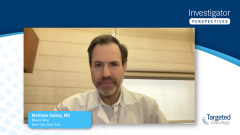
Dr. Galsky’s Perspectives on the CheckMate 274 Data Results
Author(s)Matthew Galsky, MD
An expert discusses how recent data on adjuvant anti–PD-1 trials highlight the significance of disease-free survival (DFS) and overall survival (OS), guiding clinical decisions. In muscle-invasive urothelial carcinoma (MIBC), event-free survival (EFS) and OS benefits without delaying curative cystectomy are crucial. Adjuvant nivolumab is typically initiated within 12 weeks post cystectomy, considering pathology, recovery, and performance status.
Advertisement
Episodes in this series
Video content above is prompted by the following:
- What are your perspectives on the data, and what has been learned? How are you applying these results to your practice?
- To what degree do you consider the benefit regarding DFS vs OS in adjuvant anti–PD-1 trials?
- What is the importance of EFS and OS benefit with no associated delay in curative intent radical cystectomy for your patients with MIBC?
- What is the time window in patients after radical cystectomy prior to initiating adjuvant nivolumab (if no metastases)? Which factors inform your decision?
Advertisement
Related to this article

Oncologists weigh second-line options after IO/TKI failure in metastatic ccRCC, highlighting tolerability, mechanism shifts, and belzutifan’s broader role.
In the phase 3 EMBER-3 trial, imlunestrant plus abemaciclib doubled median progression-free survival vs imlunestrant alone in ESR1-mutated advanced breast cancer.

CELESTIMO trial shows mosunetuzumab plus lenalidomide boosts PFS in relapsed follicular lymphoma, supporting earlier-line outpatient, chemo-free care.

The FDA's Expedited Investigational New Drug (IND) Pilot Program pairs trial sponsors and research institutions to promote phase 1 trials in the US.

During a live event, Sikander Ailawadhi, MD, and participants considered a case patient with relapsed multiple myeloma after a quadruplet induction who declined CAR T-cell therapy.

FDA clears Triton 1 robotic colonoscopy for screening and advanced therapy, backed by first-in-human data showing high detection rates and reduced clinician workload.

Results from the phase 3 MAVERICK trial (SWOG S1827) show MRI surveillance alone improved cognitive failure-free survival vs adding PCI in SCLC.
The COPERNICUS study of amivantamab/lazertinib showed lower rates of adverse events and discontinuation with supportive care regimens in patients with EGFR-mutated non–small cell lung cancer.
Advertisement
Advertisement
Trending on Targeted Oncology - Immunotherapy, Biomarkers, and Cancer Pathways
1
FDA Approves Imlunestrant Plus Abemaciclib in ESR1-Mutated Breast Cancer
2
Data Increasingly Favor BCMA-Directed Therapy For Early-Relapse Myeloma
3
Sub-Q Amivantamab and Supportive Care Minimize Discontinuation in EGFR+ NSCLC
4
FDA Clears Robotic System for Endoscopic Procedures in the Colon
5