


DLBCL
Latest News
Advertisement
Latest Videos















































Advertisement
More News

An explanation of the design, efficacy, and adverse events of L-MIND, a trial investigating a combination treatment for R/R DLBCL.
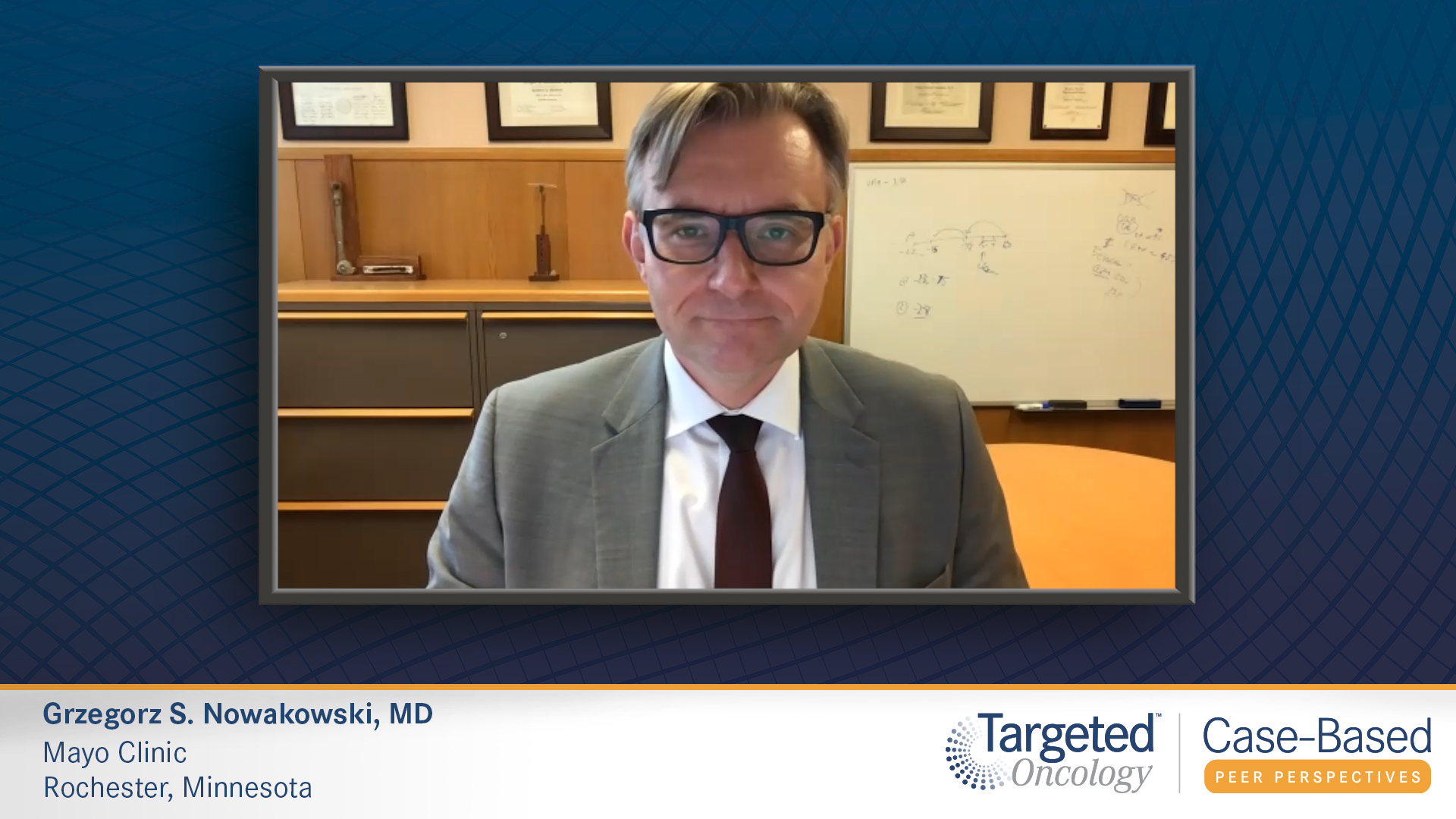
Dr Grzegorz S. Nowakowski reviews the currently available second-line treatment options for transplant-ineligible R/R DLBCL.
A discussion on the clinical factors that put patients at risk of having relapsed DLBCL.

Matthew S. McKinney, MD, discusses the tolerability observed in the LOTIS-2 trial of loncastuximab tesirine of patients with relapsed/refractory diffuse large B-cell lymphoma.

During a Targeted Oncology case-based roundtable event, Cyrus M. Khan, MD, discussed the data supporting the use of polatuzumab, bendamustine, and rituximab, tasfasitamab plus lenalidomide, and loncastuximab tesirine in patients with relapsed/refractory diffuse large B-cell lymphoma.

Ian W. Flinn, MD, PhD, discusses the study design and results of the phase 2 trial of the antibody-drug conjugate polatuzumab vedotin-piiq plus bendamustine and rituximab for patients with relapsed/refractory diffuse large B-cell lymphoma.
During a Targeted Oncology case-based roundtable event, Stephen Ansell, MD, PhD, discussed the options for third-line therapy for relapsed/refractory diffuse large B-cell lymphoma.

During a live virtual event, Jakub Svoboda, MD, discussed with participants the choice of therapy for a patient with relapsed/refractory diffuse large B-cell lymphoma who would not receive stem cell transplant or chimeric antigen receptor therapy.

In season 3, episode 5 of Targeted Talks, Thomas Habermann, MD, discusses the upcoming advances in the treatment of diffuse large B-cell lymphoma.
During a live virtual event, Jason Westin, MD, discussed with participants the choice of third-line treatment for relapsed/refractory diffuse large B-cell lymphoma for a patient who declines chimeric antigen receptor T-cell therapy.

According to Grzegorz S. Nowakowski, MD, results from a subgroup analysis of the observational RE-MIND study may aid in contextualizing therapy options for treating patients with relapsed or refractory diffuse large B-cell lymphoma.

In the EPCORE NHL-2 trial , epcoritamab therapy was manageable and achieved high rates of response in patients with high-risk diffuse large B-cell lymphoma.
Roundtable Discussion: Budde Focuses on the Factors Affecting Treatment Decisions in B-cell Lymphoma
During a Targeted Oncology case-based event, Elizabeth Budde, MD, PhD, discussed with participants the case of a patient with relapsed/refractory diffuse large B-cell lymphoma who was not eligible for stem cell transplant and declined chimeric antigen receptor T-cell therapy.
Matthew J. Matasar, MD, discusses the current landscape of diffuse large B-cell lymphoma.
Thomas Habermann, MD, discusses the unmet clinical needs which still exist for patients with diffuse large B-cell lymphoma.

During a case-based roundtable event, Matthew McKinney, MD, discussed data supporting the use of novel therapies in patients with relapsed/refractory diffuse large B-cell lymphoma.
During a live virtual event, Brian T. Hill, MD, discussed the results of the L-MIND study of tafasitamab plus lenalidomide for patients with relapsed/refractory diffuse B-cell lymphoma.
During a live virtual event, Jason Westin, MD, discussed the challenges of giving patients access to chimeric antigen receptor T-cell therapy.

During a Targeted Oncology case-based roundtable event, Victor Yazbeck, MD, MS, discussed the data from recent clinical trials of tafasitamab/lenalidomide, polatuzumab vedotin, and loncastuximab tesirine for patients with relapsed/refractory diffuse large B-cell lymphoma.
During a Targeted Oncology case-based roundtable event, John M. Burke, MD, discussed decision-making for third-line therapy for an elderly patient with diffuse large B-cell lymphoma.
Matthew J. Matasar, MD, discusses how updates in the diffuse large B-cell lymphoma field have led to improved quality of life in patients.
During a live virtual event, Philippe Armand, MD, PhD, discussed the results of the LOTIS-2 trial of loncastuximab tesirine in patients with relapsed/refractory diffuse large B-cell lymphoma.

During a Targeted Oncology case-based roundtable event, Ajay K. Gopal, MD, discussed the options for second-line and subsequent treatment of a patient with relapsed/refractory diffuse large B-cell lymphoma who refuses CAR T-cell therapy.

Tafasitamab-cxi plus lenalidomide has been added to the NCCN Guidelines as a preferred regimen for patients with diffuse large B-cell lymphoma.
During a live virtual event, Philippe Armand, MD, PhD, discussed the results of the outcomes of clinical trials of tafasitamab plus lenalidomide as well as loncastuximab tesirine in diffuse large B-cell lymphoma.
Advertisement
Advertisement
Trending on Targeted Oncology - Immunotherapy, Biomarkers, and Cancer Pathways
1
FDA Oncology Recap: Approvals, Designations, and Decisions in September 2026
2
Plinabulin Receives FDA Fast Track Designation in Post-ICI NSCLC
3
Denosumab Biosimilar Approved For Existing Oncology Indications
4
CEPHEUS and Frontline Treatment in Newly Diagnosed Multiple Myeloma
5