





DLBCL
Latest News
Advertisement
Latest Videos















































Advertisement
More News

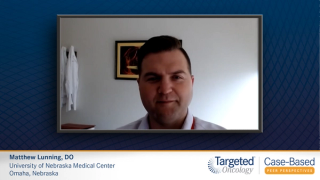
During a Targeted Oncology case-based roundtable event, Matthew A. Lunning, DO, discussed the results of the L-MIND study of tafasitamab and lenalidomide in patients with diffuse large B-cell lymphoma.
A phase 2b study aims to confirm positive efficacy and safety results previously reported with the combination of maveropepimut-S and pembrolizumab in patients with relapsed or refractory diffuse large B-cell lymphoma.

The FDA granted both a regenerative medicine advanced therapy and fast track designation to C-CAR039 for relapsed or refractory diffuse large B-cell lymphoma.

During a live virtual event, Ann LaCasce, MD, MMSc, discusses third-line treatment options for diffuse large B-cell lymphoma when considering eligibility for chimeric antigen receptor T-cell therapy.
In an interview with Targeted Oncology, Mark Roschewski, MD, discussed precision medicine in diffuse large B-cell lymphoma and using acalabrutinib in a pre-chemotherapy window to better understand its potential benefit.
For a 41-year-old female patient with diffuse large B-cell lymphoma, multiple treatment options exists. Elizabeth A. Brem, MD discussed the options during an interview with Targeted Oncology.
During a live virtual event, Paolo Caimi, MD, discussed the barriers to using loncastuximab tesirine for diffuse large B-cell lymphoma preceding chimeric antigen receptor T-cell therapy.
In an interview with Targeted Oncology, Thomas Habermann, MD discusses the current unmet needs in the DLBCL space, along with the future of targeted therapies.

During a live virtual event, Paolo Caimi, MD, discussed the toxicity and dosage of loncastuximab tesirine as a third-line therapy for diffuse large B-cell lymphoma before receiving chimeric antigen receptor T-cell therapy.
Early study results indicate that YTB323 may be effective and safe for the treatment of patients with diffuse large B-cell lymphoma.
Polatuzumab vedotin-piiq added to the R-CHOP regimen elicited a high progession-free survival rate in patients with newly-diagnosed diffuse large B-cell lymphoma.
An RMAT designation granted to FT516 is supported by data from a phase 1 trial of FT516 in patients with diffuse large B-cell lymphoma.
The efficacy and safety of naratuximab emtansine plus rituximab appear impressive for patients with B-cell non-Hodgkin lymphomas who are ineligible for stem cell transplant or chimeric antigen receptor T-cell therapy.
The use of ibrutinib plus loncastuximab tesirine induced encouraging anti-tumor activity and a manageable safety profile in patients with relapsed/refractory (R/R) diffuse large B-cell lymphoma, according to results from an interim analysis of the LOTIS-3 trial.
During a live virtual event, Paolo Caimi, MD, discussed third-line treatment of a patient with diffuse large B-cell lymphoma and navigating obstacles to treatment.
During a live virtual event, Beth A. Christian, MD, discussed data on third-line loncastuximab tesirine treatment in patients with diffuse large B-cell lymphoma and how to sequence treatments for patients who may receive CAR T-cell therapy.
Following 6 well-tolerated cycles of R-CHOP, a 75-year-old patient with diffuse large B-cell lymphoma showed complete remission on a PET scan. But 1 year later, the disease relapsed.
During a live virtual event, Beth A. Christian, MD, discussed real-world challenges of providing timely access to CAR-T cell therapy for patients with diffuse large B-cell lymphoma.
During a live virtual event, Beth A. Christian, MD, discussed approaches to third-line treatment of transplant-ineligible DLBCL and when to consider CAR T-cell therapy.

Jason Westin, MD, discusses unmet clinical needs in diffuse large B-cell lymphoma landscape.
While antibody-drug conjugates have shown promise in patients with relapsed/refractory diffuse large B-cell lymphoma, there are other options that can help patients before moving on to CAR T-cell therapy.
Eleven months after completing therapy for diffuse large B-cell lymphoma, a 43-year-old patients reported fever, night sweats, and back pain, and a palpable lymph node was discovered in her left groin.
Justin Kline, MD, discusses what makes loncastuximab tesirine-lpyl a good bridge therapy for patients with relapsed/refractory diffuse large B-cell lymphoma to potential CAR T-cell therapy.
One year after a 75-year-old patient with diffuse large B-cell lymphoma achieved remission following 6 cycles of R-CHOP, the patient relapsed but declined transplant.
Looking at the challenges with CAR T-cell therapies in patients with diffuse large B-cell lymphoma Justin Kline, MD, discusses the best available therapies for patients who relapse on treatment.
Advertisement
Advertisement
Trending on Targeted Oncology - Immunotherapy, Biomarkers, and Cancer Pathways
1
FDA Oncology Recap: Approvals, Designations, and Decisions in September 2026
2
Plinabulin Receives FDA Fast Track Designation in Post-ICI NSCLC
3
Denosumab Biosimilar Approved For Existing Oncology Indications
4
CEPHEUS and Frontline Treatment in Newly Diagnosed Multiple Myeloma
5