


HCC
Latest News
Advertisement
Latest Videos






























Advertisement
More News



Managing Metastatic Hepatocellular Carcinoma

Carlos Becerra, MD, recently shared the treatment considerations and decisions he makes when treating patients with metastatic colorectal cancer and hepatocellular carcinoma. Becerra, a medical oncologist at Texas Oncology, Baylor Charles A. Sammons Cancer Center, explained his treatment decisions based on 2 case scenarios during a <em>Targeted Oncology </em>live case-based peer perspectives presentation.
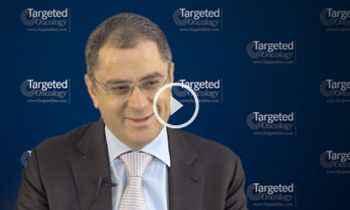
Ghassan K. Abou-Alfa, MD, a medical oncologist at Memorial Sloan Kettering Cancer Center, discusses results of the CELESTIAL trial. The results were clinically and statistically significant, Abou-Alfa notes.
Overall survival was extended in patients with hepatocellular carcinoma and elevated baseline alpha-fetoprotein (AFP) who received second-line treatment with ramucirumab (Cyramza) versus placebo, according to findings from the phase III REACH-2 trial.
According to early results of an ongoing early-phase study presented at the 2018 Society of Interventional Radiology Annual Scientific Meeting, image-guided injections of talimogene laherparepvec immunotherapy (T-VEC, Imylgic) were deemed tolerable in patients with advanced-stage liver metastases.


Selective internal radiation therapy with yttrium-90 resin microspheres was better tolerated compared with sorafenib in patients with advanced unresectable hepatocellular carcinoma, However, findings from the phase III SARAH trial did not improve rates of overall survival or progression-free survival. A radiotherapy approach was compared with this targeted therapy in the SARAH trial.
Lenvatinib mesylate, an oral tyrosine kinase inhibitor, will continue to be developed and commercialized worldwide by its creator, Japan’s Eisai Co. Ltd, in a strategic collaboration with Merck, which is better known as MSD outside of the United States and Canada. The partnership between the 2 companies was announced on March 7.
Advertisement
Advertisement
Trending on Targeted Oncology - Immunotherapy, Biomarkers, and Cancer Pathways
1
FDA Accepts NDA for Daraxonrasib in Metastatic Pancreatic Cancer
2
Advanced Renal Cell Carcinoma: Tailoring Second-Line Therapy After Prior Immunotherapy
3
Teclistamab/Talquetamab Reduces Risk of Progression by 89% in R/R Multiple Myeloma
4
IMNN-001 Plus Chemo Cuts MRD Rate in Frontline Ovarian Cancer
5