
HCC
Latest News
Advertisement
Latest Videos






























Advertisement
More News


Lung Cancer

According to findings from the phase III REFLECT trial now published online in the <em>Lancet,</em><sup> </sup>lenvatinib improved progression-free survival and was noninferior for overall survival compared with sorafenib for the frontline treatment of patients with unresectable hepatocellular carcinoma.
In phase II data reported at the 2018 Gastrointestinal Cancers Symposium, treatment with the PD-1 inhibitor pembrolizumab (Keytruda) elicited promising progression-free survival and overall survival results in patients with advanced hepatocellular carcinoma who received previous treatment with sorafenib.
According to findings from the phase III CELESTIAL trial released ahead of the 2018 Gastrointestinal Cancers Symposium, cabozantinib (Cabometyx) improved median overall survival by 2.2 months compared with placebo for patients with previously treated advanced hepatocellular carcinoma.
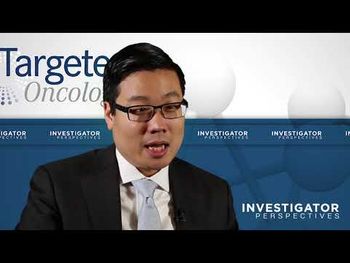
Madappa Kundranda, MD, PhD, recently discussed the cases of 2 patients with hepatocellular carcinoma (HCC), and the treatment considerations and decisions he would make when treating these patients. Dr. Kundranda, Director of Gastrointestinal Oncology at Banner MD Anderson Cancer Center, Phoenix discussed these cases during a <em>Targeted Oncology</em> live case-based peer perspectives dinner.
Chimeric antigen receptor T-cell therapy with bb2121 demonstrated an objective response rate of 94% in patients with relapsed/refractory multiple myeloma, according to findings from a dose-escalation study. The senior study author, James N. Kochenderfer, MD, presented updated findings from the study during the 2017 ASH Annual Meeting, and commented that 89% of patients had a very good partial response or better, and 56% of patients had a complete remission. <br />
In patients with hepatocellular carcinoma (HCC), pill burden and treatment costs were reduced, with a trend toward improved treatment completion, by lowering the dose of sorafenib (Nexavar), according to results from a retrospective, multi-institutional study.
The researchers review intra-arterial therapies and the latest literature supporting their use, categorized by different tumor types.
In a presentation during the 2017 International Liver Cancer Association Annual Conference, Amit G. Singal, MD, discussed data surrounding the use of direct acting antivirals, a novel and completely oral hepatitis C therapy, which has been associated with a high response rate.
An overall response rate of 16% was demonstrated in patients with FGF 19 immunohistochemistry-positive hepatocellular carcinoma treated with BLU-554, which was higher than the response rates of 10% or less that are seen with the currently approved HCC treatments.
Researchers are seeking prognostic biomarkers for response to treatment with adjuvant sorafenib (Nexavar) in patients with hepatocellular carcinoma, according to a presentation during the 2017 International Liver Cancer Association Annual Conference in Seoul, South Korea.

A supplemental new drug application for lenvatinib as a frontline systemic treatment for patients with advanced hepatocellular carcinoma has been accepted by the FDA, acccording to a statement from Eisai, the company developing the therapy.
Nivolumab (Opdivo) was given an accelerated approval by the FDA for the treatment of patients with hepatocellular carcinoma following prior treatment with sorafenib (Nexavar). The approval was granted for patients regardless of their PD-L1 status.
While currently-approved treatments for HCC are typically associated with responses rates of 10% or less, findings presented at the 11th Annual Conference of the ILCA, BLU-554, a potent and highly selective inhibitor of fibroblast growth factor receptor 4 (FGFR4), induced an overall response rate of 16% (95% CI, 6-31) in patients with FGF 19 IHC-positive HCC.
In updated phase III results, lenvatinib continued to be noninferior in overall survival compared with sorafenib for patients with unresectable hepatocellular carcinoma, and achieved significant improvements in progression-free survival, time to progression, and objective response rate compared with sorafenib.
Multidisciplinary findings across the field of hepatocellular carcinoma will be showcased at the 11th International Liver Cancer Association Annual Conference on September 15 to 17 in Seoul, South Korea. Abstracts already under discussion at this year’s ILCA conference include pivotal research on VGEF inhibitors, immunotherapy regimens, and biomarkers.
Amit G. Singal, MD, MS, stressed that improvement for precision screening for hepatocellular carcinoma with the current screening techniques through its risk-stratifying approach.
Hepatocyte pERK-positive immunostaining and microvascular invasion were independent prognostic factors of recurrence-free survival for patients with hepatocellular carcinoma treated with adjuvant sorafenib. According to an analysis of the phase III STORM study presented at the 11th International Liver Cancer Association Annual Conference, a predictive biomarker for recurrence was not uncovered.
According to updated phase III results presented at the 11th Annual International Liver Cancer Association Conference, first-line therapy with Lenvatinib in the frontline setting continued to be noninferior in overall survival and achieve significant improvements in progression-free survival, time to progression, and objective response rate versus sorafenib for patients with unresectable hepatocellular carcinoma
Direct acting antivirals, a novel, oral hepatitis C therapy, is associated with a high response rate. DAAs are used in most patients being treated for hepatitis C, including those with decompensated cirrhosis. However, this treatment has been replaced by interferon-based therapy for patients with hepatitis C.
According to findings presented at the 11th Annual Conference on the International Liver Cancer Association in Seoul, South Korea, BLU-554 induced an overall response rate of 16% in patients with FGF 19 immunohistochemistry-positive hepatocellular carcinoma. BLU-554 is a potent and highly selective inhibitor of fibroblast growth factor receptor 4.
Advertisement
Advertisement
Trending on Targeted Oncology - Immunotherapy, Biomarkers, and Cancer Pathways
1
FDA Accepts NDA for Daraxonrasib in Metastatic Pancreatic Cancer
2
Advanced Renal Cell Carcinoma: Tailoring Second-Line Therapy After Prior Immunotherapy
3
Teclistamab/Talquetamab Reduces Risk of Progression by 89% in R/R Multiple Myeloma
4
IMNN-001 Plus Chemo Cuts MRD Rate in Frontline Ovarian Cancer
5