

HCC
Latest News

July 5th 2016
By Silas Inman
Regorafenib (Stivarga) as a second-line therapy for patients with unresectable hepatocellular carcinoma (HCC) who have progressed on sorafenib (Nexavar), showed an improved overall survival (OS) rate of 2.8 months over placebo. Findings from the phase III RESORCE study will be submitted to the FDA and European Medicines Agency (EMA) for potential approval, according to a statement from the developer of regorafenib, Bayer Pharmaceuticals.
Advertisement
Latest Videos



























Advertisement
More News

Sue Naeyaert, senior director of Biosimilars Policy, EMD Serono, discusses the long-term impact that biosimilars could potentially have on the field of oncology.

Second-line treatment with regorafenib improved overall survival compared with best supportive care for patients with unresectable hepatocellular carcinoma following progression on sorafenib.

Ghassan K. Abou-Alfa, MD, medical oncologist, Memorial Sloan Kettering, discusses what is on the horizon for the use of PD-L1 agents in liver cancer.

A number of novel therapies are currently being explored as second-line treatments for patients with advanced hepatocellular carcinoma, including a host of targeted therapies and various immune checkpoint inhibitors.
Michael Manns, MD, explains the possible link between hepatitis C and hepatocellular carcinoma.

Anne Covey, MD, discusses options for patients with hepatocellular carcinoma (HCC) who cannot undergo resection or transplant.

Ablation is now considered a potentially curable treatment option for patients with hepatocellular carcinoma (HCC) that should be considered secondarily to transplant and resection.
The FDA has accepted an investigational new drug application for autologous genetically modified T-cells expressing affinity enhanced T-cell receptors (TCRs) specific to alpha fetoprotein (AFP) in patients with locally advanced or metastatic hepatocellular carcinoma (HCC).
Roughly 25% of patients with resectable hepatocellular carcinoma (HCC) experienced major tumor necrosis following 4 weeks of preoperative treatment with sorafenib (Nexavar).
During a preplanned interim analysis, an independent data monitoring committee recommended the continuation of the phase III METIV-HCC trial, which is assessing the safety and efficacy of tivantinib in patients with hepatocellular carcinoma (HCC) with high MET expression.
Death rates from cancer continue to drop in the United States, with one troubling exception: more people are dying from liver cancer.
Despite the widespread prevalence of hepatocellular carcinoma (HCC), effective treatment options for both primary and secondary liver tumors have remained elusive, as these tumors are difficult to manage, especially in cases where the tumor is unresectable.
The hepatic portal vein is critical to normal liver function and supplies approximately 75% of the blood supply to the liver. In the general population, portal vein thrombosis (PVT) is relatively rare, occurring with an incidence of about in 1 in 100,000 people.
Both in the United States and worldwide, the incidence of hepatocellular carcinoma (HCC) is on the rise, and, despite extensive research, sorafenib (Nexavar) remains the only FDA-approved systemic therapy available for advanced tumors.

The FDA has approved defibrotide sodium (Defitelio) as a treatment for severe hepatic veno-occlusive disease (VOD) with associated kidney or lung abnormalities following hematopoietic stem cell transplantation (HSCT), based on data from the collection of 3 studies.
Ghassan Abou-Alfa, MD, a medical oncologist at Memorial Sloan Kettering Cancer Center, discusses the significance of a recent trial and how the findings can impact the treatment paradigm of HCC.
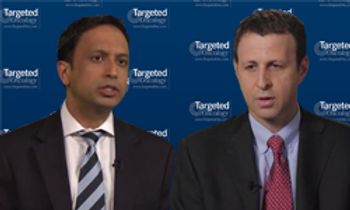
Unresectable Hepatocellular carcinoma with Amit Singal, MD and Richard Finn, MD




Advertisement
Advertisement
Trending on Targeted Oncology - Immunotherapy, Biomarkers, and Cancer Pathways
1
FDA Accepts NDA for Daraxonrasib in Metastatic Pancreatic Cancer
2
Advanced Renal Cell Carcinoma: Tailoring Second-Line Therapy After Prior Immunotherapy
3
Teclistamab/Talquetamab Reduces Risk of Progression by 89% in R/R Multiple Myeloma
4
IMNN-001 Plus Chemo Cuts MRD Rate in Frontline Ovarian Cancer
5