



SKIN CANCERS
Latest News

Advertisement
Latest Videos















































Advertisement
More News
Frontline treatment with the anti-PD-1 agent nivolumab significantly extended overall survival (OS) when compared with dacarbazine for patients with metastatic or unresectable melanoma.
Jedd D. Wolchok, MD, PhD, discusses an updated analysis presented at the 2014 ASCO Annual Meeting that looked at pembrolizumab (MK-3475) for patients with melanoma.
The FDA has approved the radioactive diagnostic imaging agent Lymphoseek injection to guide sentinel lymph node biopsy in patients with cancer of the head and neck.

Gregory A. Daniels, MD, PhD, Associate Clinical Professor of Medicine, Division of Hematology-Oncology, University of California, San Diego, discusses the findings of the 2007-2012 PROCLAIM national registry
Phase I results presented in 2013 from a study combining ipilimumab with the anti-PD-1 antibody, nivolumab,1 showed a 40% objective response rate in 53 patients with advanced melanoma and a preliminary overall survival (OS) of 80%.

The intratumoral injection talimogene laherparepvec (T-VEC) demonstrated promise in combinations and utility as a monotherapy in certain subsets of patients with unresectable melanoma.
Pembrolizumab continues to deliver impressive results in patients with advanced melanoma—producing long-lasting responses and improved overall survival, regardless of whether patients have been previously treated with ipilimumab.

The immunotherapy drug ipilimumab (Yervoy) reduced the relative risk of cancer recurrence in the adjuvant setting by 25% compared to placebo for patients with high-risk, lymph-node positive (stage III) melanoma.
Ghassan K. Abou-Alfa, MD, Gastrointestinal Oncology Service, Memorial Sloan Kettering Cancer Center, discusses a retrospective study to determine the prognostic value of C-reactive protein (CRP) levels in patients with hepatocellular carcinoma (HCC) who are undergoing treatment with sorafenib.

Despite improved efficacy with new therapies, both as monotherapy or in combinations, they provide new challenges to nurses in managing side effects and adjusting treatment.
Jedd D. Wolchok, MD, PhD, from Memorial Sloan Kettering Cancer Center, discusses ongoing research regarding combinations of immunotherapies.
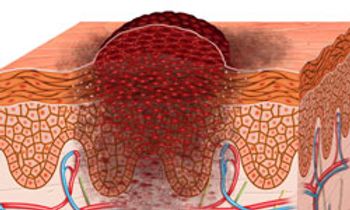
The combination of vemurafenib with the investigational MEK inhibitor cobimetinib demonstrated a 13.7-month median PFS and an ORR of 87% in treatment-naïve patients with BRAFV600 mutation-positive metastatic melanoma.
Michael A. Postow, MD, attending physician, Melanoma and Immunotherapeutics Service, Memorial Sloan Kettering Cancer Center, discusses using PD-L1 as a biomarker of response in melanoma.
The FDA has assigned a priority review designation to the PD-1 inhibitor pembrolizumab (MK-3475) as a treatment for patients with unresectable or metastatic melanoma following progression on ipilimumab.
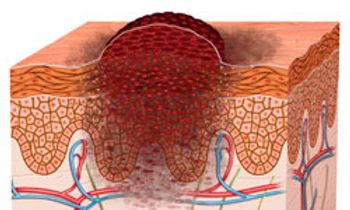
Many patients with melanoma are diagnosed with unresectable stage III or IV disease that requires systemic treatment. Treatment of melanoma depends largely on the stage at diagnosis.
This article provides an overview of clinical trials in melanoma.
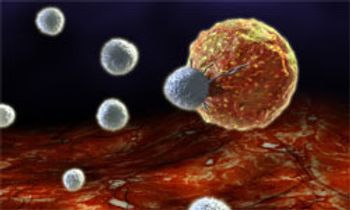
A novel immunotherapeutic known as IMCgp100 induced clinical responses with manageable toxicity in patients with advanced melanoma.

Valerie Francescutti, MD, FRCSC, assistant professor, Surgical Oncology, Roswell Park Cancer Institute (RPCI), discusses educating patients with melanoma on their disease.

Talimogene laherparepvec (T-VEC) significantly improved durable response rates (DRR) but failed to extend overall survival (OS) in patients with advanced melanoma.
Michael A. Postow, MD, attending physician, Melanoma and Immunotherapeutics Service, Memorial Sloan Kettering Cancer Center, discusses sequencing strategies in treating patients with melanoma.

More than 50% of melanoma involves mutation in the BRAF protein, which is part of the mitogen-activated protein kinase (MAPK) signal transduction pathway.

The first combination therapy for advanced melanoma received approval from the Food and Drug Administration (FDA) January 2014.
Jedd D. Wolchok, MD, PhD, chief, Melanoma and Immunotherapeutics Service, Lloyd J. Old Chair for Clinical Investigation, Memorial Sloan Kettering Cancer Center, explains immune checkpoint blockade.

Melanoma experts and researchers have gained ground in the development of novel and effective immunotherapies as well as targeted agents for those patients with metastatic melanoma who harbor specific tumor mutations.

Keith T. Flaherty, MD, discusses the latest and forthcoming research regarding MEK/BRAF combination therapies.
Advertisement
Advertisement
Trending on Targeted Oncology - Immunotherapy, Biomarkers, and Cancer Pathways
1
Plinabulin Receives FDA Fast Track Designation in Post-ICI NSCLC
2
FDA Oncology Recap: Approvals, Designations, and Decisions in September 2026
3
Denosumab Biosimilar Approved For Existing Oncology Indications
4
CEPHEUS and Frontline Treatment in Newly Diagnosed Multiple Myeloma
5