




SKIN CANCERS
Latest News

Advertisement
Latest Videos
















































Advertisement
More News

Breakthrough therapy designation has been granted by the US Food and Drug Adminstration (FDA) to the combination of the BRAF inhibitor dabrafenib (Tafinlar) and the MEK inhibitor trametinib (Mekinist) as treatment for patients with BRAF V600E-mutant non–small cell lung cancer

The PD-1 inhibitor pembrolizumab (Keytruda) was recently approved by the European Commission for the treatment of adult patients who have unresectable or metastatic melanoma in the first-line and previously treated settings, based on data from three clinical trials that evaluated the medication in over 1500 patients.
A letter to the editor in the New England Journal of Medicine from notable researchers at Memorial Sloan Kettering reported a case of complete remission of metastatic melanoma in a patient treated with single doses of ipiliumab and nivolumab.
Marc Ernstoff, MD, director of melanoma, Cleveland Clinic, discusses progression-free survival (PFS) and safety in patients with advanced melanoma (MEL) receiving nivolumab (NIVO) combined with ipilimumab (IPI).
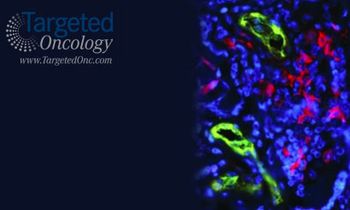
Using treatments that target epigenetic pathways, including the DNA methyltransferase inhibitor decitabine and the histone deacetylase (HDAC) inhibitor panobinostat, investigators hoped to improve the sensitivity of melanoma cells to the alkylating agent temozolomide.

The FDA has extended the review timeline for the combination of cobimetinib and vemurafenib in advanced melanoma by 3 months, to allow ample time to review updated data that were presented at the 2015 ASCO Annual Meeting.

Janice M. Mehnert, MD, of the Rutgers Cancer Institute of New Jersey, gave a presentation at the 2015 ASCO Annual Meeting entitled, “Should Comorbidities Be an Automatic Exclusion for Clinical Trials?â€

Stefani Spranger, PhD, post-doctoral fellow, Department of Pathology, The University of Chicago Medicine, discusses the significance of melanoma intrinsic β-catenin signaling on immune exclusion and resistance to immunotherapies.
Anna C. Pavlick, MD, associate professor, co-director, Melanoma Program, assistant director, Clinical Research Education, discusses a study that examined two immunotherapy agents, ipilimumab and nivolumab, in patients with melanoma.

Shirish Gadgeel, MD, Barbara Ann Karmanos Cancer Institute, discusses a phase III study examining afatinib versus erlotinib as a second-line treatment of patients with advanced squamous cell carcinoma (SCC) of the lung following first-line platinum-based chemotherapy.

The treatment of patients with metastatic melanoma has undergone a dramatic transformation since the approval of the CTLA-4 inhibitor ipilimumab in 2011.

Frontline nivolumab more than doubled progression-free survival (PFS), both as monotherapy and combined with ipilimumab compared with ipilimumab alone in patients with advanced melanoma, according to results from the phase III CheckMate-067 trial.

Patients with BRAF-mutant late-stage melanoma derive a lasting overall survival (OS) benefit from treatment with the combination of dabrafenib and trametinib compared with dabrafenib and placebo, according to the final results from the COMBI-d phase III double-blinded trial.

Treatment with the PD-1 inhibitor nivolumab demonstrated similar efficacy regardless of prior treatment with a BRAF inhibitor or ipilimumab in patients with BRAF mutant or wild type metastatic melanoma.

Taking the vitamin B3 pill nicotinamide could reduce the risk of recurrence for those with a history of non-melanoma skin cancer.
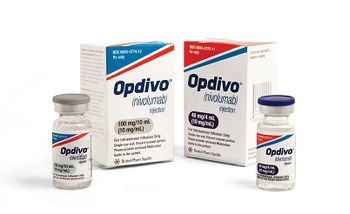
The PD-1 inhibitor nivolumab (Opdivo) has been has been assigned priority review designation from the US Food and Drug Administration (FDA) as a treatment for previously untreated patients with unresectable or metastatic melanoma.

Despite their promise, checkpoint inhibitors are not effective in every patient, and research suggests the STING (stimulator of interferon genes) pathway may hold important clues as to why some tumors fail to respond.

Mark R. Middleton, MD, PhD, discusses the results of a phase I/IIa trial of IMCgp100, a bispecific immunotherapy, for the treatment of patients with melanoma.

Results from the phase II, double-blind CheckMate-069 clinical trial showed unprecedented response rates with ipilimumab combined with nivolumab in previously treated patients with metastatic melanoma.
Jeffrey S. Weber, MD, PhD, a senior member at Moffitt Cancer Center, discusses toxicities associated with immunotherapies for the treatment of patients with melanoma.
Ahmad Tarhini, MD, PhD, associate professor, University of Pittsburgh School of Medicine, compares two doses of ipilimumab (Yervoy).
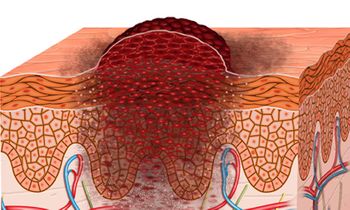
Pembrolizumab (Keytruda) yielded significantly better outcomes compared with ipilimumab (Yervoy) in a randomized phase III trial of patients with advanced melanoma.

IMCgp100, an anti-CD3 antibody fragment fused to a gp100-specific T cell receptor, yielded long-lasting responses in patients with advanced melanoma.

A delay between the diagnosis of melanoma and needed surgery may evoke anxiety and psychological stress; although the impact on morbidity and mortality remains controversial.

Abnormal driver mutations contribute to tumor progression and have been prime targets for many therapeutic studies in oncology; however, researchers are focusing more and more on the less-studied passenger mutations and their role in tumor progression.
Advertisement
Advertisement
Trending on Targeted Oncology - Immunotherapy, Biomarkers, and Cancer Pathways
1
Plinabulin Receives FDA Fast Track Designation in Post-ICI NSCLC
2
FDA Oncology Recap: Approvals, Designations, and Decisions in September 2026
3
Denosumab Biosimilar Approved For Existing Oncology Indications
4
CEPHEUS and Frontline Treatment in Newly Diagnosed Multiple Myeloma
5