


SKIN CANCERS
Latest News
Advertisement
Latest Videos
















































Advertisement
More News

Anthony M. Magliocco, MD, discusses the pathologist’s role when treating a patient with melanoma.
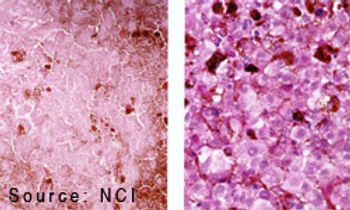
At the 11th International Congress on Targeted Therapies in Cancer, The International Journal of Targeted Therapies in Cancer spoke with Dr. Sosman about his conference presentation on advances in immunotherapy in melanoma.
Omid Hamid, MD, chief, translational research and immunotherapy, director, cutaneous oncology and melanoma, The Angeles Clinic and Research Institute, discusses treatment decisions for patients with melanoma.

Vernon K. Sondak, MD, chair of the Department of Cutaneous Oncology at Moffitt Cancer Center, discusses the use of ipilimumab in the adjuvant setting for patients with melanoma.

Karl Lewis, MD, medical oncologist, associate professor, University of Colorado, discusses sequencing immunotherapy and targeted therapy for patients with melanoma.
Ragini Kudchadkar, MD, assistant professor, medical oncology, Moffitt Cancer Center, discusses testing in patients with melanoma.

Vernon K. Sondak, MD, talks about personalized medicine when treating patients with melanoma.
Jeffrey S. Weber, MD, PhD, discusses testing for genetic mutations in patients with melanoma.

Karl Lewis, MD, discusses new and emerging treatments for metastatic melanoma.

Results from a pooled analysis of survival data from 12 studies demonstrated long-term survival benefit in patients with metastatic or locally advanced or unresectable melanoma treated with ipilimumab (Yervoy).

Anthony M. Magliocco, MD, discusses the difficulties of analyzing the genome of melanoma tumors.

High doses of interleukin-2 (IL-2) could be used to treat patients with melanoma whose disease has metastasized to the brain, potentially expanding options in a population facing a grim prognosis, according to researchers from Saint Louis University in Missouri.
Antoni Ribas, MD, PhD, the director of the Tumor Immunology Program Area at UCLA's Jonsson Comprehensive Cancer Center, discusses the efficacy of ipilimumab for the treatment of melanoma.
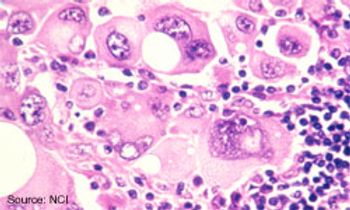
The FDA has granted Priority Review designation to dabrafenib (Tafinlar) and trametinib (Mekinist) as a combination treatment for patients with unresectable or metastatic melanoma with a BRAFV600E/K mutation.

Over the past two decades, there has been a shift away from indiscriminate cell-killing by anticancer agents toward the development of more specific drugs that target key aspects of cancer cell biology.

An investigational MAGE-A3 vaccine failed to significantly extend disease-free survival (DFS) in certain patients with postsurgical melanoma
Jeffrey A. Sosman, MD, from the Vanderbilt-Ingram Cancer Center, discusses a trial comparing two doses of ipilimumab for patients with metastatic melanoma.

The efficacy of combining two immunotherapy agents will be assessed in a randomized, double-blind phase III study.

Howard L. Kaufman, MD, says that the oncology community is in its infancy in terms of selecting and sequencing immunotherapies for patients with melanoma.

The dependence of cancer cells on the continued activity of specific oncogenes for proliferation and survival can be explored for drug development.

Paul A. Bunn, Jr, MD, from the University of Colorado, discusses afatinib for patients with activating epidermal growth factor receptor mutation.
Carol Aghajanian, MD, from the Memorial Sloan-Kettering Cancer Center, discusses the difficulties with a gold standard clinical trial endpoint in ovarian cancer.
Alex A. Adjei, MD, PhD, discusses the use of MEK inhibitors when treating patients with melanoma.
Jeffrey A. Sosman, MD, from the Vanderbilt-Ingram Cancer Center, discusses drug sequencing for patients with melanoma at the 11th Annual International Congress on Targeted Therapies in Cancer.
Renier J. Brentjens, MD, PhD, from Memorial Sloan-Kettering Cancer Center, discusses the potential efficacy of CAR-modified T cells for the treatment of solid tumors.
Advertisement
Advertisement
Trending on Targeted Oncology - Immunotherapy, Biomarkers, and Cancer Pathways
1
Plinabulin Receives FDA Fast Track Designation in Post-ICI NSCLC
2
FDA Oncology Recap: Approvals, Designations, and Decisions in September 2026
3
Denosumab Biosimilar Approved For Existing Oncology Indications
4
CEPHEUS and Frontline Treatment in Newly Diagnosed Multiple Myeloma
5