



SKIN CANCERS
Latest News

Advertisement
Latest Videos















































Advertisement
More News

In PIVOT IO-001, patients with metastatic melanoma are no longer being enrolled and treatment arms have been unblinded after the combination of bempegaldesleukin and nivolumab did not meet its coprimary end points.

In an interview with Targeted Oncology, Annelise Wilhite, MD, discussed the findings of a clinical investigation of survival in patients with vulvar/vaginal melanomas.

During a Targeted Oncology case-based roundtable event, Jennifer L. Atlas, MD, discussed the case of a patient with infiltrative basal cell carcinoma with participants.
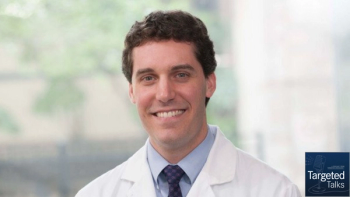
In season 3, episode 1 of Targeted Talks, Michael A. Postow, MD, discusses available targeted agents for BRAF-mutant melanoma and ongoing clinical questions about treating the disease.
A patient with a high-risk skin cancer has been administered an investigational interleukin 7 agent, efineptakin alfa, plus atezolizumab, initiating treatment in a phase 2a study.
In an interview with Targeted Oncology, Michael A. Postow, MD, summarized the treatment landscape, provided takeaways from the most recent additions, and discussed other targets for metastatic melanoma.

Topline results from an international phase 1 study of cosibelimab are encouraging and may lead to the submission of a biologics license application to the FDA.

During a Targeted Oncology case-based roundtable event, Francis Paul Worden, MD, discussed treatment options for a patient with high-risk basal cell carcinoma.
Tebentafusp-tebn has been granted FDA approval to treat HLA-A*02:01-positive adult patients with unresectable or metastatic uveal melanoma based on positive results from a phase 3 study.
During a recent medical meeting, Michael Lowe, MD, MA, FACS, FSSO, and Ragini Kudchadkar, MD, debated adjuvant therapy versus neoadjuvant for the treatment of resectable stage III melanoma.

Efficacy was seen with blocking LAG-3 in combination with PD-1 as a therapeutic strategy for patients with melanoma. Additionally, this research establishes LAG-3 as the third immune checkpoint pathway to have proven clinical benefit in this patient population.

ST101 was granted a fast track designation based on preliminary data of an ongoing phase 1/2 trial.
Darovasertib and crizotinib demonstrated promising efficacy and tolerable safety in patients with metastatic uveal melanoma, according to preliminary results of a phase 1/2 trial announced in a press release from IDEAYA Biosciences.
The biopsy of a 88-year-man demonstrated infiltrative basal cell carcinoma. his case was the topic of discussion during a Case-Based Roundtable led by Nikhil I. Khushalani, MD.
Results from the EMPOWER-Cervical 1/ GOG-3016/ENGOT-cx9 trial led the FDA to grant priority review to cemiplimab as treatment of patients with recurrent or metastatic cervical cancer whose disease progressed on or after chemotherapy.
An 88-year-old man presented with a nonhealing ulcer on the lateral aspect of his nose. The patient was diagnosed with Basal cell carcinoma.
The current standard of care for BCC is surgical excision. However, the procedure is often time consuming, expensive, and may lead to cosmetic and functional morbidity.
Meredith McKean, MD, MPH, moderated a Case-Based Roundtable discussion about a 88-year-old patient with Basel cell carcinoma.
Karl D. Lewis, MD, the professor of Medicine in the Cutaneous Oncology Program at University of Colorado in Aurora, CO, discussed the case of a 88-year-old patient with Basel cell carcinoma.
Cutaneous melanoma is disproportionately lethal among skin cancers, and as incidence rates of cutaneous melanoma continue to rise in the United States, so does the importance of managing melanoma cases in alignment with personalized prognoses.
According to Inge Marie Svane, MD, PhD, the truth about what drives tumor-infiltrating lymphocyte efficacy is not yet known, and more research is needed.
The FDA has expanded its approval for pembrolizumab monotherapy to include the treatment of patients with locally advanced cutaneous squamous cell carcinoma that is not curable by surgery or radiation.
During a Targeted Oncology Case-Based Roundtable event, Michael K. Wong, MD, PhD, discussed the case of a 69-year-old patient with cutaneous squamous cell carcinoma.
Newer immunotherapy approaches continue to be explored to treat patients with relapsed or refractory MCC after PD-1/ PD-L1 inhibition.
Research has suggested that neoadjuvant immunotherapy combinations are superior to adjuvant immunotherapy for patients with stage III melanoma.
Advertisement
Advertisement
Trending on Targeted Oncology - Immunotherapy, Biomarkers, and Cancer Pathways
1
FDA Oncology Recap: Approvals, Designations, and Decisions in September 2026
2
Plinabulin Receives FDA Fast Track Designation in Post-ICI NSCLC
3
Denosumab Biosimilar Approved For Existing Oncology Indications
4
CEPHEUS and Frontline Treatment in Newly Diagnosed Multiple Myeloma
5