


SKIN CANCERS
Latest News
Advertisement
Video Series
Latest Videos















































Advertisement
More News
Three different sequencing schemas for immunotherapy followed by targeted therapy in patients with BRAF V600-mutant melanoma have shown positive survival outcomes and safety consistent with results from prior studies.
Data from the DREAMseq trial have answered a lingering question of how to sequence therapy for patients with advanced BRAF-mutant melanoma. This research supports immunotherapy in the first-line setting, followed by BRAK/MEK inhibitors.
In the phase 3 CheckMate-76K study, adjuvant nivolumab administered to patients with stage IIB/C melanoma resulted in prolonged recurrence-free survival compared with placebo.

Neoadjuvant cemiplimab showed promising results in cutaneous squamous cell carcinoma with a near or complete disappearance of disease in almost 64% of patients set to undergo surgery.

A cohort of a clinical trial of the experimental agent STP705 successfully treated patients with cutaneous basal cell carcinomas, offering an alternative to surgery or other skin cancer treatment.
In patients with BRAF V600-mutated melanoma and central nervous system metastases, treatment with atezolizumab to vemurafenib plus cobimetinib achieved a good intracranial overall response rate. Responses were all achieved with the combination in patients with BRAF wild-type tumors.

Valencia D. Thomas, MD, MHCM, discusses the unmet needs which remain in the non-melanoma skin cancer space.
During a Targeted Oncology case-based event, Jason Luke, MD, and Laura K. Ferris, MD, PhD, discussed treatment for a patient with basal cell carcinoma.
Long-term follow-up in the COLUMBUS study shows continued survival improvement with encorafenib plus binimetinib and impressive disease control in patients with BRAF V600-mutant melanoma.
Treatment with ITI-3000 has begun in a first-in-human, phase 1 study of patients with Merkel cell carcinoma.
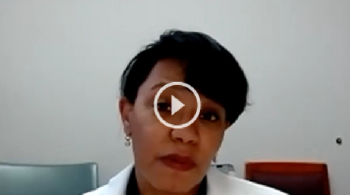
Valencia Thomas, MD, MHCM, MD Anderson Cancer Center, discusses the future for managing care in patients with non-melanoma skin cancers.
Niraj H. Mehta, MD, reviews the areas of the body where skin cancer can be hard to detect, what the skin cancer will look like on those parts of the body, risk factors for those receiving treatment, and follow-up for patients to catch recurrences.
A manageable side-effect profile, signal of efficacy, and 36% increase in the recommended phase 2 dose (RP2D) was seen with a step-up dosing regimen of tebentafusp in patients with metastatic uveal melanoma.

Results from the RELATIVITY-047 trial showed improved progression-free survival for patients with advanced melanoma who received nivolumab plus relatlimab.
In an interview with Targeted Oncology following the tweet chat, Omid A. Hamid, MD, discussed the key takeaways from the discussion, including the ways he would treat the patient discussed in the case.

Valencia Thomas, MD, MHCM, discusses how the management of care for patients with non-melanoma skin cancers has changed over the past decade.

For military veterans, future research should be accompanied by systematic efforts to improve skin cancer prevention, treatment, and outcomes among military service members and veterans, according to Carolyn J. Heckman, PhD.
New and emerging treatment modalities for advanced nonmelanoma skin cancer provide hope for this patient subset.
Spartalizumab With Dabrafenib and Trametinib Shows Modest Efficacy in BRAF V600+ Metastatic Melanoma
The phase 3 COMBI-i trial demonstrated that spartalizumab plus dabrafenib and trametinib has modest efficacy in BRAF V600-positive metastatic melanoma, but no progression-free survival benefit when compared with dabrafenib and trametinib alone.
For advanced melanoma that is resistant to anti–PD-1 therapies, the addition of BO-112 to pembrolizumab appears to be effective and safe.
Valencia D. Thomas, MD, discussed managing patients with aggressive non-melanoma skin cancers with the emergence of new treatment options and technology.

Barriers to improving BRAF testing turnaround time in patients with melanoma have been identified in a retrospective analysis of real-world data collected in Canada.
Response were observed with the combination of sotigalimab and pembrolizumab in patients with metastatic melanoma treated in a phase 1/2 study.
According to a phase 1/2 study, nivolumab plus PD-L1/IDO peptide vaccine may be effective for the treatment of patients with metastatic melanoma.
Efficacy and toxicity of standard four dose nivolumab and ipilimumab induction therapy in melanoma to be likely driven by the first 2 doses as demonstrated in the Adaptively Dosed ImmunoTherapy Trial.
Advertisement
Advertisement
Trending on Targeted Oncology - Immunotherapy, Biomarkers, and Cancer Pathways
1
FDA Oncology Recap: Approvals, Designations, and Decisions in September 2026
2
Plinabulin Receives FDA Fast Track Designation in Post-ICI NSCLC
3
Denosumab Biosimilar Approved For Existing Oncology Indications
4
CEPHEUS and Frontline Treatment in Newly Diagnosed Multiple Myeloma
5