


SKIN CANCERS
Latest News
Advertisement
Latest Videos















































Advertisement
More News

Pembrolizumab received FDA approval for the treatment of patients with recurrent or metastatic cutaneous squamous cell carcinoma that cannot be cured by either surgery or radiation.
With a Fast Track designation, the development of seviprotimut-L will be facilitated and expeditiously reviewed by the FDA to address an unmet medical need for patients with stage IIB and IIIC melanoma,

“The data demonstrated deepening clinical responses with cemiplimab over time. Furthermore, duration of response and overall survival [OS] are considerably longer with cemiplimab than what has previously been recorded with other agents.”
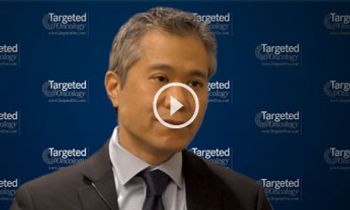
Richard D. Carvajal, MD, discusses 2 therapies in clinical trials registering patients with melanoma.
"...These important new results further demonstrate Libtayo’s potential in patients with difficult-to-treat, non-melanoma skin cancers."
In an interview with Targeted Oncology, Bruce L. Levine, PhD, discussed hot topics in the treatment landscape of melanoma, including the development of chimeric antigen receptor T and NK cells.
In an interview with Targeted Oncology, Michael A. Davies, MD, PhD, discussed the current treatment landscape of melanoma and the recent advances that have provided a great level of optimism to what has been known to be a very challenging cancer setting.
"As anticipated, the data continues to become more compelling with extended SGX301 treatment."
"The clinical benefit suggested for these anti-PD-1 refractory melanoma patients with limited treatment options includes stabilization of disease and even responses, which is creating hope that this combination might be of benefit to patients in the PD-1 refractory setting."
Ragini Kudchadkar, MD, discusses the overall prognosis of patients with ocular melanoma.
Georgina V. Long, BSc, PhD, MBBS, FRACP, discusses the design and efficacy of the phase III CheckMate 067 trial for patients with advanced melanoma.<br />

Exposure to ruxolitinib, hydroxyurea, and pipobroman as first-line treatment of Philadelphia-negative myeloproliferative neoplasms alone or in combination with other cytoreductive treatment may increase the probability of patients developing non-melanoma skin cancer, highlighting a need for active dermatological surveillance of these patients, according to findings from the MPN-K study, published in Leukemia.
Treatment with <a>STP705</a> led to the achievement of complete histological clearance of squamous cell carcinoma <em>in situ</em> in a large proportion of patients, meeting the primary end point of the study, according to an interim analysis of the first 3 cohorts in an ongoing phase II clinical trial in patients with non-melanoma skin cancer announced by Sirnaomics Inc.
The FDA has accepted and granted a priority review to a supplemental Biologics License Application for pembrolizumab for the treatment of adult and pediatric patients with unresectable or metastatic solid tumors with tissue tumor mutational burden-high who have progressed following prior treatment and who have no satisfactory alternative treatment options.
In an interview with Targeted Oncology, Richard D. Carvajal, MD, discussed the challenges of conducting clinical trials for the treatment of patients with uveal melanoma, as well as the excitement surrounding 2 potential therapies in this space.
An association was found between a lower risk of grade 3 or higher chemotherapy toxicity with higher body mass indexes and normal albumin, a protein made in the liver, levels in older adult patients with solid tumors, according to an analysis of a prospective, multicenter study.
A sudden surge in the cases of COVID-19 due to pandemic, along with efforts to contain it, has led to multiple challenges that no country has experienced in the last several decades. The global pandemic from COVID-19 poses a unique set of challenges not only for patients with cancer who need their treatment, but also for caregivers, oncologists, and the overall care team.
The mortality rate for cutaneous melanoma was significantly reduced between 2013 to 2016 as a result of new targeted therapies for metastatic disease, according to a recent report in the American Journal of Public Health. It is the largest death decline ever recorded for skin cancer.
In an interview with Targeted Oncology, Kashyap Patel, MD, discussed the COVID-19 pandemic and the implementation of new precautions in his practice as the number of COVID-19 infected persons rises in the state.<br />
Patients harboring IDH1/2 muta­tions may receive benefit by the use of PARP inhibitors, with investigators initi­ating clinical trials in patients across multiple different tumor types to determine the efficacy of this strategy.
Treatment with pembrolizumab demonstrated antitumor activity along with tolerable toxicity in patients with 4 different rare and hard-to-treat malignancies, according to results from a phase II study led by The University of Texas MD Anderson Cancer Center researchers and published in the Journal for ImmunoTherapy of Cancer.
Adjuvant ipilimumab at a dose of 3 mg/kg demonstrated a survival benefit in patients with resected high-risk melanoma compared with high-dose interferon alfa-2b, according to the findings for a phase III E1609 clinical trial from the North American Intergroup.
David Polsky, MD, PhD, discusses methods to identify circulating tumor DNA in patients with melanoma.
From 2001 to 2017, the cancer death rates continued to decline in the United States, and these decreases were observed in all major racial and ethnic groups, as well as in males, females, adolescents, young adults, and children. However, the rates of cancer incidence for all cancers slightly increased in females from 2012 to 2016, according to the Annual Report to the Nation on the Status of Cancer, which was published in Cancer.<sup> </sup>
The FDA has accepted a Biologics License Application for MYL-1402O, a proposed biosimilar to bevacizumab, according to a press release from co-developers Biocon and Mylan. The BLA is seeking approval for the biosimilar as a treatment for multiple types of cancer and the FDA has set an action date goal of December 27, 2020, for a decision on the BLA.
Advertisement
Advertisement
Trending on Targeted Oncology - Immunotherapy, Biomarkers, and Cancer Pathways
1
FDA Oncology Recap: Approvals, Designations, and Decisions in September 2026
2
Plinabulin Receives FDA Fast Track Designation in Post-ICI NSCLC
3
Denosumab Biosimilar Approved For Existing Oncology Indications
4
CEPHEUS and Frontline Treatment in Newly Diagnosed Multiple Myeloma
5