

Susan Bal, MD, discusses novel targets for relapsed/refractory multiple myeloma at the 2023 Annual Meeting.

Susan Bal, MD, discusses novel targets for relapsed/refractory multiple myeloma at the 2023 Annual Meeting.

New treatments, including luspatercept-aamt, have been added to the treatment algorithm of patients with low-risk myelodysplastic syndrome in 2020.

These FDA approvals display a relentless pursuit of innovation in oncology, empowering oncologists with increasingly sophisticated treatment to help navigate and manage cancer’s complexities.

Igor Astsaturov, MD, PhD, discusses the planned phase 1 trial of LP-184 in multiple advanced solid tumors and central nervous system cancers, including pancreatic cancer.
In an interview with Targeted Oncology, Daniel Wolff, MD, discussed findings from the phase 2 AGAVE-201 trial evaluating axatilimab as a potential treatment option for patients with chronic graft-vs-host disease.
Shannon Westin, MD, MPH, FACOG, discusses her hopes following the presentation of promising data from the phase 3 DUO-E trial of durvalumab plus chemotherapy followed by durvalumab and olaparib maintenance in patients with newly diagnosed advanced or recurrent endometrial cancer.
The FDA is considering 2 applications for amivantamab plus lazertinib as a first-line treatment for EGFR-mutated non–small cell lung cancer, based on the phase 3 MARIPOSA study.
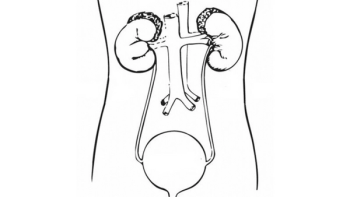
According to John M. Burke, MD, it is hard to imagine that results presented at ESMO in the urothelial cancer space will not lead to the complete replacement of conventional chemotherapy as the standard first-line treatment.
Dipti Patel-Donnelly, MD, discusses the gaps between academic centers and community oncology regarding treatments for hematologic malignancies.
Jennifer A. Woyach, MD, discusses background and updated findings from the phase 1/2 BRUIN study of pirtobrutinib for the treatment of heavily pretreated patients with chronic lymphocytic leukemia or small lymphocytic lymphoma after prior treatment with a covalent Bruton tyrosine kinase inhibitor.
Anita Kumar, MD, discusses findings from the phase 2 study of zanubrutinib, obinutuzumab, and venetoclax in TP53-mutant mantle cell lymphoma presented at ASH 2023.
Sara A. Hurvitz, MD, discusses some of the current important questions for the field of HER2-positive breast cancer now and highlights which of these unanswered questions she hopes are addressed soon.

In an interview with Targeted Oncology, Igor Astsaturov, MD, PhD, discussed what led to the development of LP-184 and explained how the agent will be evaluated moving forward.
A phase 1 study investigating padeliporfin vascular targeted photodynamic in patients with unresectable pancreatic adenocarcinoma will begin following the FDA clearance of an investigational new drug application.

The median overall survival at 19 months of patients with glioblastoma continues to benefit from treatment with olaptesed pegol plus radiation and bevacizumab.
Paolo Tarantino, MD, discusses what to know about the real-world findings from the RELIEVE study which were presented at the 2023 San Antonio Breast Cancer Symposium.

Though climate change threatens everyone’s health and safety, those with cancer are increasingly vulnerable.
Christopher J. Melani, MD, discusses updated data from the phase 1b/2 ViPOR trial of the combination of venetoclax, ibrutinib, prednisone, obinutuzumab, and lenalidomide, in patients with diffuse large B-cell lymphoma.
In an interview with Targeted Oncology, Yazmin Odia, MD, discussed the 3rd Annual Miami Cancer Institute Oncology Rehabilitation Symposium, including her discussion on incorporating rehabilitation into the course of treatment for patients with brain cancer.
The FDA has granted clearance to a promising new agent, AVS100, for a phase 1 trial to target solid tumors.
The FDA has issued a complete response letter which will delay the potential approval of cosibelimab for patients with cutaneous squamous cell carcinoma.

Paula Rodriguez-Otero, MD, PhD, discusses the promising results from the phase 3 PERSEUS trial in patients with newly diagnosed, transplant-eligible multiple myeloma.

A cohort study highlighted the racial and ethnic survival disparities that exist among patients with early breast cancer who are being treated with standardized initial care.
The phase 3 RELATIVITY-123 trial in metastatic microsatellite stable colorectal cancer is not expected to meet its primary end point upon completion and is being discontinued due to futility.

Though the combination of talazoparib and avelumab was safe as a treatment for patients with specific types of kidney cancer, the combination was not effective, according to findings from a phase 2 trial.

Findings from 3-year follow-up of KEYNOTE-942/mRNA-4157-P201 show that the cancer vaccine mRNA-4157 plus pembrolizumab reduced the risk of recurrence or death in patients with stage III/IV melanoma following resection.

Positive headline results from part 2 of the RUBY/ENGOT-EN6/GOG3031/NSGO trial support the potential use of dostarlimab as the backbone for therapies in mismatch repair proficient/microsatellite stable primary advanced or recurrent endometrial cancer.

Adrian Cristian, MD, discusses the background of the third annual Miami Cancer Institute Oncology Rehabilitation Symposium and provides an overview of some of the topics that were presented this year.

Anlotinib, a novel multi-targeting tyrosine kinase inhibitor, and icotinib, a first-generation EGFR TKI, demonstrated efficacy and tolerability in the first line for the treatment of patients with EGFR-mutated advanced non–small cell lung cancer.

Guru P. Sonpavde, MD, provides insights on the phase 3 CheckMate 901 trial and explains what a community oncologist should know about the use of concurrent frontline nivolumab plus chemotherapy in metastatic or unresectable urothelial carcinoma based on this study.