

Tislelizumab improved overall survival compared with investigator’s choice of chemotherapy in patients with advanced unresectable or metastatic esophageal squamous cell carcinoma who have received prior systemic therapy.

Tislelizumab improved overall survival compared with investigator’s choice of chemotherapy in patients with advanced unresectable or metastatic esophageal squamous cell carcinoma who have received prior systemic therapy.
The FDA has granted an Orphan Drug Designation to the novel small molecule chemotherapeutic uttroside-B for the treatment of patients with hepatocellular carcinoma.

The role of Bruton's tyrosine kinase inhibitors in chronic lymphocytic leukemia is supported by clinical trial research. During a Targeted Oncology Case-Based Peer Perspectives Roundtable event, Peter Hillmen, MB ChB, PhD, provided evidence around acalabrutinib for the case of a 61-year-old woman.
Patients with mantle cell lymphoma and primary gastrointestinal involvement have similar outcomes to those with secondary gastrointestinal involvement, according to results from one of the largest known studies of gastrointestinal mantle cell lymphoma.
An Orphan Drug Designation was granted by the FDA to ilixadencel as use for the treatment of patients with soft tissue sarcoma.

Ecaterina E. Ileana Dumbrava, MD, provides background information on a phase 1/2 study of the agent alone and in combination with an immune checkpoint inhibitor in patients with advanced HER2-expressing solid tumors.

In an interview with Targeted Oncology following a tweet chat, Mark Lewis, MD, discussed the key takeaways from the discussion and highlighted both the role of immunotherapy in metastatic colorectal cancer and the management of toxicities associated with chemoimmunotherapy regimens.
Multiple PI3K inhibitors are approved for the treatment of patients with follicular lymphoma in the relapsed or refractory setting, but these targeted treatments are usually given indefinitely, leading to toxicity and increased cost for patients.
Her appointment comes during the coronavirus disease 2019 vaccination push.
The FDA granted a Fast Track designation to the humanized PD-1 monoclonal antibody toripalimab for the first-line treatment of patients with mucosal melanoma.
JAK inhibitors designed for the treatment of myelofibrosis address the splenic response and constitutional symptoms associated with the disease, but the agents are inherently myelosuppressive and can exacerbate anemia and thrombocytopenia.
In an interview with Targeted Oncology, Senthil Damodaran, MD, PhD, discussed the need for an ESR1-targeted agent for the postmenopausal women with ESR1-positive, locally advanced or metastatic ER-positive/HER2-negative breast cancer.
This week, the FDA granted Priority Review designation to 4 therapies. The designations were across multiple malignancies and cancer-related conditions, including for patients with post-transplant complications, gastric/gastroesophageal junction and esophageal adenocarcinoma, as well as with squamous cell carcinoma of the anal canal.
The FDA has accepted a Biologics License Application for retifanlimab, an investigational intravenous PD-1 inhibitor, as a potential treatment for adult patients with locally advanced or metastatic squamous cell carcinoma of the anal canal who have progressed on or who are intolerant of platinum-based chemotherapy and has granted the BLA a Priority Review.
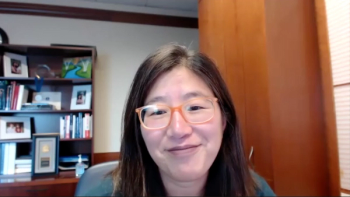
Anne Chiang, MD, associate professor, Medical Oncology, Yale School of Medicine, discusses hard-to-treat lung cancer and how due to recent lung cancer innovations and treatment options, the tumor is becoming increasingly heterogeneous.

In an interview with Targeted Oncology, Benjamin Solomon, MBBS, PhD, discussed the findings from the CROWN study that compared lorlatinib with crizotinib as treatment of patients with ALK-positive non-small cell lung cancer.
Ibrutinib in combination with venetoclax displayed preliminary anti-tumor activity along with a tolerable toxicity profile as treatment of patients with relapsed or refractory follicular lymphoma, showing promise for the first-ever Bruton’s tyrosine kinase and BCL-2 inhibitor combination to be explored in the clinical trial setting for this patient population.
The FDA has lifted a partial clinical hold on the phase 1 clinical trials of PRS-343 for solid tumors.
The FDA has granted a Priority Review to the combination of nivolumab with fluoropyrimidine- and platinum-containing chemotherapy, which is a potential treatment option for patients with advanced or metastatic gastric cancer, gastroesophageal junction cancer, or esophageal adenocarcinoma.
The FDA accepted a supplemental Biologics License Application for nivolumab as adjuvant treatment of patients with resected esophageal or gastroesophageal junction cancer after neoadjuvant chemoradiation therapy and granted it Priority Review.
Cancer mortality has been on a continuous decline since its peak in 1991, resulting in an overall reduction of 31% in the mortality rate and approximately 3.2 million fewer cancer deaths in the United States.
In an interview with Targeted Oncology, Naveen Pemmaraju, MD, discussed the potential role of an add-back strategy as treatment of patients with myelofibrosis who no longer benefited from prior ruxolitinib.
The FDA has accepted a Biologics License Application for narsoplimab and granted it Priority Review for use as treatment of hematopoietic stem cell transplant-associated thrombotic microangiopathy.
In the phase 2 JACCRO GC-07 trial, patients with stage III gastric cancer who received the combination of S-1 and docetaxel in the adjuvant setting had a 29% reduction in the risk of relapse.
In an interview with Targeted Oncology, Yelena Y. Janjigian, MD, provided important highlights from the DESTINY-Gastric01 trial and explained the overall impact of the FDA approval of trastuzumab deruxtecan for oncologists treating patients with HER2-positive advanced gastric cancer or GEJ cancers.

In an interview with Targeted Oncology, Maria E. Cabanillas, MD, discussed the use of larotrectinib as treatment of patients with thyroid cancer and the pooled findings from 2 larotrectinib trials.
The combination of axitinib and octreotide LAR demonstrated activity and a tolerable safety profile in patients with advanced G1-2 extra-pancreatic neuroendocrine tumors in a phase 2/3 study.
The FDA has approved fam-trastuzumab deruxtecan-nxki for the treatment of adult patients with HER2-positive locally advanced or metastatic gastric or gastroesophageal junction adenocarcinoma who have received a prior trastuzumab-based regimen.
The FDA has granted accelerated approval to the subcutaneous formulation of daratumumab with hyaluronidase-fihj as treatment of patients with light chain amyloidosis.
In an interview with Targeted Oncology, Vivek Subbiah, MD, discussed the role of selpercatinib as treatment of patients with RET fusion-positive NSCLC, which is supported by findings from the LIBRETTO-001 study.