

“In order to make continued progress, one gap we face is the limited diversity in our cohorts of patients in biomedical research.”

“In order to make continued progress, one gap we face is the limited diversity in our cohorts of patients in biomedical research.”
A report demonstrated the potential impact of COVID-19 on cancer-related patient encounters, which may result in an increase in the presentation of later-stage disease for newly diagnosed patients in future months.

A draft recommendation statement was published by the United States Preventive Services Task Force stating that screening for colorectal cancer should start at the age of 45, according to a press release from the Task Force Bulletin.
Results of a randomized phase 3 trial demonstrated that the 3-month regimen of adjuvant combination therapy caused significantly less grade 2 or more peripheral sensory neuropathy than the 6-month regimen as treatment of patients with high-risk stage II colorectal cancer, while not affecting the 3-year disease-free survival rate, according to a report in the Annals of Oncology.
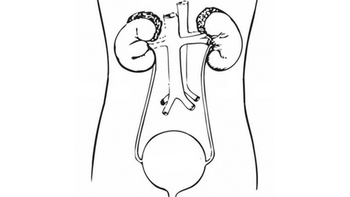
In genitourinary cancers, presentation of subgroup analysis data from large randomized clinical trials demonstrated findings that will change practice for oncologists who treat patients with prostate cancer, bladder cancer, and renal cell carcinoma.
The FDA has granted approval to the cobas EGFR Mutation Test v2 as a companion diagnostic for EGFR tyrosine kinase inhibitors as treatment of patients with EGFR-mutant non–small cell lung cancer, which is the first assay approved for this indication.
Targeted Oncology reviews trending news online for the week of October 30, 2020, including recent news from the FDA, updates in oncology, and new information regarding COVID-19.
In an interview with Targeted Oncology, Laurence Albiges, MD, PhD, discussed the updated findings for the combination of nivolumab and ipilimumab as treatment of patients with intermediate- and poor-risk advanced renal cell carcinoma.

While the remarkable activity of crizotinib as treatment of patients with ROS1 fusion-positive advanced non–small cell lung cancer was confirmed in a recent systemic review and meta-analysis, the efficacy of this small molecular inhibitor remains unknown in patients with MET-altered disease.
The FDA has granted an Orphan Drug designation to CPI-613 for the treatment of soft tissue sarcoma.
The FDA has accepted the supplemental Biologics License Application for cemiplimab-rwlc and granted it Priority Review for the frontline treatment of patients with locally advanced or metastatic non–small cell lung cancer with ≥50% PD-L1 expression.

In evaluating MYC rearrangement and its correlation with disease burden and prognostics in newly diagnosed multiple myeloma, a group of Mayo Clinic investigators found that the alteration is associated with high disease burden and independently prognosticates adverse outcomes in patients.
The treatment landscape of mantle cell lymphoma has been enriched with the development of several targeted therapies, but patients considered to have high-risk disease tend to have a worse prognosis, despite the latest development in the field.
The FDA has granted approval to the FoundationOne Liquid CDx as a companion diagnostic indicated for the to identify patients who may derive benefit from treatment with 3 FDA-approved targeted therapies, including alpelisib, rucaparib, and alectinib.
The FDA granted a Priority Review designation to the supplemental Biologics License Application for trastuzumab deruxtecan as treatment of patients with HER2-positive metastatic gastric or gastroesophageal junction adenocarcinoma.
During a recent tweet chat, Sara M. Tolaney, MD, MPH, joined Targeted Oncology for the discussion of a 39-year-old woman with relapsed/refractory HR-negative/HER2-positive metastatic breast cancer.
In an interview with Targeted Oncology, Masahiro Tsuboi, MD, discussed the findings for the ADAURA study, which explored the role of osimertinib as treatment of patients with early-stage EGFR-mutant non-small cell lung cancer following a complete tumor resection.
The IDH1 inhibitor olutasidenib showed a favorable safety profile in patients with relapsed/refractory acute myeloid leukemia treated in a phase 1/2 clinical trial, according to topline results.
Adagrasib demonstrated promising antitumor activity as monotherapy in patients with previously treated KRAS G12C–mutant non–small cell lung cancer, according to findings from the phase 1/2 KRYSTAL-1 trial.
Historically, in gastrointestinal malignancies, chemotherapy and radiation were utilized to improve outcomes for patients. Although these treatments were effective, disease recurrence was always imminent, demonstrating a need for novel therapies.
The FDA granted approval to the FoundationOne®CDx as a companion diagnostic for the identification of NTRK fusions across all solid tumors for the approved larotrectinib.
At the International Kidney Cancer Symposium Virtual Event, the 2019 Nobel Laureate and recipients of the Kidney Cancer Association’s Andrew C. Noviak Award and the Pieter de Mulder Memorial Award will give lectures on key topics in the kidney cancer landscape on November 6 and 7.
In an interview with Targeted Oncology, Naomi Haas, MD, discussed the role of PSMA in the treatment landscape of prostate cancer and highlighted the key findings from the phase 1 chimeric antigen receptor T-cell trial in metastatic castration resistance prostate cancer.
Targeted Oncology reviews trending news online for the week of October 23, 2020, including updates in oncology and the COVID-19 pandemic.
During a Targeted Oncology Case Based Peer Perspectives event, Neeraj Agarwal, MD, discussed the case of a 57-year-old male patient with nonmetastatic castration resistant prostate cancer.
OneOncology announced the creation of OneOncology Research Network, which is a national non-exclusive clinical trial site management organization.
Driver alterations in neuregulin 1 fusions have recently come to light as a new target in patients with advanced or metastatic solid tumors. Multiple factors contribute to poor outcomes in this patients population with limited option for resolution.
The phase 3 CASSIOPEIA study met its primary end point of progression-free survival with daratumumab maintenance in newly-diagnosed multiple myeloma eligible for autologous stem cell transplant.
Looking at the pipeline for larotrectinib, it shows an accelerated course, which can be attributed to the drug’s potential to fulfill an unmet need in oncology.
Two immune systems conditions, hypogammaglobulinemia and hypocomplementemia, may be predictive of adverse outcomes in patients with diffuse large B-cell lymphoma, according to a published study.