

Kat M. Aguilar, MPH, discussed findings on social determinants of health and cancer mortality and their practical implications for community oncology.

Kat M. Aguilar, MPH, discussed findings on social determinants of health and cancer mortality and their practical implications for community oncology.

Patients with BRCA-altered uterine leiomyosarcoma treated with PARP inhibitors demonstrated encouraging outcomes.
Manmeet Ahluwalia, MD, MBA, FASCO, shares a message during Brain Cancer Awareness Month.
The FDA Oncologic Drug Advisory Committee meetings on Tuesday and Wednesday discussed therapies across lymphoma, multiple myeloma, bladder cancer, and prostate cancer.
Neel Shah, MD, and Manmeet Ahluwalia, MD, MBA, FASCO, discuss what they look most forward to hearing about and learning at the 2025 ASCO Annual Meeting.

As the oncology community prepares for the 2025 American Society of Clinical Oncology Annual Meeting, anticipation is running high over a wave of potential practice-changing data sets to be unveiled.
The ASCO 2025 press briefing showcased early highlights in cancer therapy. Here’s what you need to know.

Neel Shah, MD, our first 2025 Oncology Icon, reflected on his journey from academic medicine to community oncology.

In an interview, Aditya Shreenivas, MD, MS, discussed the approval of penpulimab in nasopharyngeal carcinoma and the study that supports it.

Manmeet Ahluwalia, MD, MBA, FASCO, discussed the significance of National Cancer Research Month and highlighted how ongoing cancer research directly impacts patient care.

In an interview, Prof Martin Dreyling discussed the approval of first-line acalabrutinib for the treatment of adult patients with mantle cell lymphoma.
A large study found GLP-1 drugs don't raise cancer risk; instead, they cut obesity-related cancers by 7% and overall mortality by 8%.
INAVO120 trial shows inavolisib, palbociclib, and fulvestrant significantly improved overall survival in PIK3CA-mutant advanced breast cancer.
AI-assisted training notably improved pathologist accuracy in HER2-low breast cancer, reducing misclassification and potentially enabling more patients to access vital therapies.
Lurbinectedin plus atezolizumab maintenance significantly improved PFS & OS in extensive-stage SCLC, offering a potential new standard of care.
Cohort 1 of the GTB-3650 phase 1 trial completed with no safety issues observed in patients with CD33-expressing hematologic malignancies.
Kat M. Aguilar, MPH, discussed the findings of the recent study evaluating the early adoption of the distress thermometer.

Deepak Bhamidipati, MD, discusses a review conducted to investigate how the design of early-phase clinical trials has evolved.

Long-term data confirms early rituximab significantly delays new treatment for advanced, asymptomatic, low-burden follicular lymphoma compared to watchful waiting. Maintenance rituximab showed no added benefit over induction alone.

The ODAC deemed the results from TALAPRO-2 are not sufficient to conclude a favorable benefit-risk profile for adding talazoparib to enzalutamide in non-HRRm mCRPC.
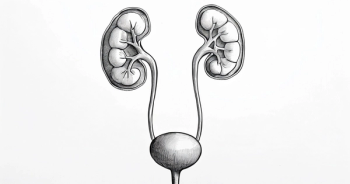
Lisa Herms, PhD, discussed findings from a retrospective analysis from the US community oncology setting on biomarker testing for bladder cancer.

The FDA ODAC decided that the overall benefit-risk of the investigational therapy UGN-102 is not favorable in patients with recurrent low-grade, intermediate-risk NMIBC.
Manmeet Ahluwalia, MD, MBA, FASCO, discussed the importance of Brain Cancer Awareness Month for a community oncologist audience.
Deepak Bhamidipati, MD, discusses the impact of the FDA's Project Optimus on early-phase drug development protocols.
Oral selinexor as maintenance therapy extended progression-free survival in patients with TP53 wild-type advanced or recurrent endometrial cancer.
In a 6 to 2 vote, the Oncologic Drug Advisory Committee determined that findings from the phase 3 AQUILA trial do support a positive benefit-risk ratio for patients with smoldering multiple myeloma.
PT-112 monotherapy advances to phase 3 trial in metastatic castration-resistant prostate cancer after positive FDA end of phase 2 meeting.

Co-hosts Kristie L. Kahl and Andrew Svonavec highlight what to look forward to at the 2025 ASCO Annual Meeting, from hot topics and emerging trends to travel recommendations.
In an 8 to 1 vote, the Oncologic Drug Advisory Committee determined that findings from the phase 3 STARGLO trial are not applicable to patients in the US with diffuse large B-cell lymphoma.

Mack Roach III, MD, discussed a study on artificial intelligence’s generalizability for prostate cancer across racial groups.