

Opinion|Videos|November 4, 2026
Breakthrough Designation and Community Adoption Potential
Author(s)Paul L. Swiecicki, MD
Paul L. Swiecicki, MD, of the University of Michigan Rogel Cancer Center, discusses how Breakthrough Therapy Designation and the convenience of subcutaneous dosing could influence adoption of amivantamab in community oncology practice for head and neck squamous cell carcinoma (HNSCC).
Advertisement
Episodes in this series
Paul L. Swiecicki, MD, of the University of Michigan Rogel Cancer Center, discusses how Breakthrough Therapy Designation and the convenience of subcutaneous dosing could influence adoption of amivantamab in community oncology practice for head and neck squamous cell carcinoma (HNSCC). He notes that administration takes under 10 minutes and, combined with the Breakthrough Therapy Designation and the efficacy data from OrigAMI-4, may support rapid regulatory approval and clinical uptake. Dr. Swiecicki points out that amivantamab is already available in the clinic for non-small cell lung cancer (NSCLC), which could allow a quicker formulary pivot to HNSCC once approved. He characterizes the agent as well tolerated overall and suggests that its combination of efficacy, tolerability, and convenient dosing may lead to swift adoption and meaningful improvement in outcomes for a patient population he describes as desperately in need of better treatment options.
Advertisement
Related to this article

FDA final guidance sets a risk-based potency assurance roadmap for cell and gene therapies, spanning development, manufacturing controls, lot release assays, and monitoring.

SABR had higher 3-year all-cause mortality than surgery in early-stage NSCLC (30.3% vs 21.6%) in an emulated target trial; the gap narrowed at age 80 and older.
Hoth Therapeutics stopped the phase 2a CLEER-001 trial of topical HT-001 early after an interim review and will seek FDA input on phase 3.
Hear how a single ctDNA blood draw 3 to 9 weeks into immunotherapy may reveal response earlier than imaging in NSCLC, with Valsamo Anagnostou, MD, PhD.

Updated ENZARAD findings show no significant metastasis-free survival benefit with enzalutamide, although patients receiving pelvic lymph node radiation may benefit from intensification.

Short-course neoadjuvant botensilimab plus balstilimab drives deep responses in resectable pMMR and dMMR colon cancer, with ctDNA clearance and no recurrences.
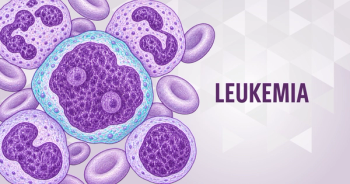
The FDA granted final approval to Alembic's generic venetoclax tablets, rated therapeutically equivalent to Venclexta, for CLL/SLL and newly diagnosed AML.

Lauren Banks, MD, PhD, explains early findings from a pilot study of lifileucel in dedifferentiated liposarcoma and undifferentiated pleomorphic sarcoma, including treatment feasibility, safety, and response durability.
Advertisement
Advertisement
Trending on Targeted Onc
1
A New Era in Sarcoma Treatment? Dr Banks on the Potential of TIL Therapy
2
FDA Finalizes Potency Guidance for Cell and Gene Therapy Products
3
FDA Approves Generic Venetoclax Tablets for CLL/SLL and AML
4
Enzalutamide Fails to Improve Survival in High-Risk Prostate Cancer
5