Shubham Pant, MD, MBBS, reviews the common adverse effects of daraxonrasib and the prophylactic strategies his team uses to manage them in pancreatic cancer.

Shubham Pant, MD, MBBS, reviews the common adverse effects of daraxonrasib and the prophylactic strategies his team uses to manage them in pancreatic cancer.
Surbhi Sidana, MD, discusses the key aspects of iberdomide that make the CELMoD's FDA approval so significant for multiple myeloma treatment.
Learn how oncologists spot burnout early and cut it with smarter workflows, PTO coverage, supportive leadership, and AI-powered documentation.
Actionable strategies curb oncologist burnout by easing admin workload, enabling true PTO disconnect, strengthening leadership communication, and boosting self-care support.
A gynecologic oncologist unpacks shifting cancer trends, HRD and germline testing, screening pitfalls, and where new treatments are headed.
Clark Chen, MD, discusses where tile-based radiation therapy fits within the broader glioblastoma treatment regimen and where the approach may be headed next.
Spot physician burnout early by recognizing emotional exhaustion, rising cynicism, and slipping effectiveness—before staff turnover and patient care suffer.
Survey of 200+ oncology physicians reveals top burnout drivers—EMR burden, leadership gaps, poor work-life boundaries, and neglected self-care—pointing to systemic fixes.
Adam Cuker, MD, MS, and Amit R. Mehta, MD, discuss the changing treatment landscape and patients goals when treating chronic immune thrombocytopenia.
Surbhi Sidana, MD, discusses the versatility of iberdomide and the approved Iber-Dd regimen in relapsed multiple myeloma.
In the GESTALT feasibility and safety trial, GammaTile reduced rapid early progression to 6% vs a historical 50% to 80%, with 93% of patients starting chemoradiation on schedule.
Oncology leaders weigh how to scale trustworthy AI platforms, align governance, and integrate care-research workflows for real-world adoption.
AI-powered trial screening helps community oncology practices identify eligible patients locally, widening access beyond academic centers and reducing barriers such as distance and logistics.
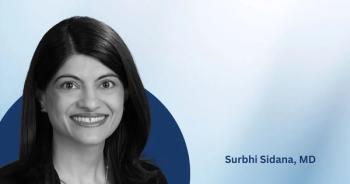
In an interview, Surbhi Sidana, MD, explores the significance of iberdomide's FDA approval and how this agent fits into the growing array of novel multiple myeloma therapies.
Agentic AI speeds oncology trial screening by synthesizing records and ranking candidates, while clinicians keep final eligibility and consent decisions.
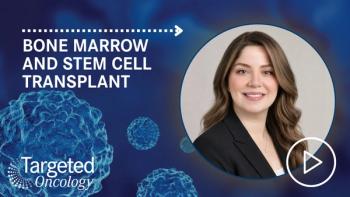
Laila Alkhouli, MD, discusses the importance of early detection of chronic graft-vs-host-disease and why standardizing screening is crucial.
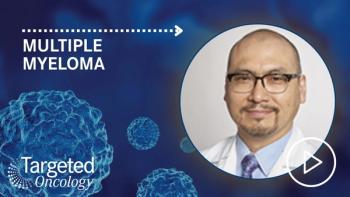
Hearn Jay Cho, MD, explains how immune profiling could inform what impairs T-cell fitness, a crucial consideration when using CAR T-cell therapy or bispecific T-cell engagers.
Agentic AI taps electronic medical records to flag timely oncology trial candidates, fit workflow, cut clinician burden, and boost community practice enrollment.
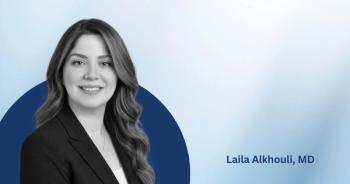
A survey of multiple transplant centers found a lack of consistent use of comprehensive screening for chronic GVHD; lead author Laila Alkhouli explained the significance of these findings.
Andrew Evens, DO, and Joanna Rhodes, MD, on CLL's transformation, CAR T vs bispecifics, Hodgkin survivorship, and delivering world-class lymphoma care across New Jersey.
Agentic AI in oncology distills evidence, molecular data, and guidelines to aid therapy decisions, promising smarter, context-aware cancer care.
David Savage, MD, PhD, discusses the greater significance of the PFS benefit observed in a trial of darovasertib plus crizotinib in patients with HLA-A*02:01–negative uveal melanoma.
Agentic AI streamlines oncology decisions and trial matching, cutting administrative load, flagging care gaps, and widening community access to studies.
UCSF's Scarlett Lin Gomez, PhD, MPH, discusses how the clinician-researcher partnership shapes future work.
Scarlett Lin Gomez, PhD, MPH, of UCSF, explains why Asian American women's breast cancer survival advantage persists after adjusting for clinical and lifestyle factors.
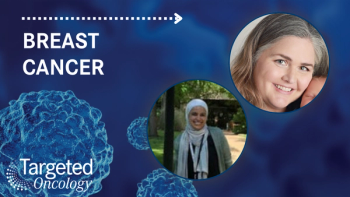
Cox and Abbadi outline next steps for BDNF/TrkB-targeted therapy, including translating the approach to high-grade serous ovarian cancer.
Hearn Jay Cho, MD, PhD, discusses the ongoing role of the CoMMpass dataset in researching immunotherapy and targeted therapy in high-risk multiple myeloma.
Maureen Cox, PhD, and Jumana Abbadi, MD, explain how macrophage-derived BDNF drives sensory nerve growth into triple-negative breast tumors, a potential drug target.
Learn how community oncologists deliver bispecific antibodies safely: step-up dosing, CRS prevention, infection support, and patient counseling.
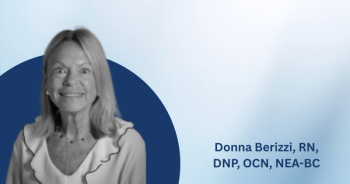
Cancer centers face rising outpatient demand; learn how smarter scheduling, better data, and AI-driven capacity planning ease flow, staffing strain, and complex therapy coordination.