

Rachel Wuerstein, MD, discusses the KAMILLA trial of trastuzumab emtansine in metastatic breast cancer for both a global and Asian cohort.

Rachel Wuerstein, MD, discusses the KAMILLA trial of trastuzumab emtansine in metastatic breast cancer for both a global and Asian cohort.

In an interview with Targeted Oncology during the EMSO Annual Congress, David O’Malley, MD, discussed the phase 1 study of ubamatamab in ovarian cancer.
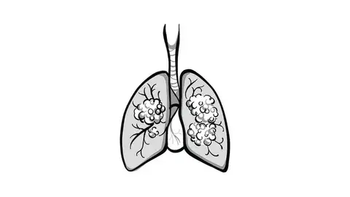
Topline data presented at ESMO 2022 showed DZD9008 met its primary end point of objective response rate and had a benign safety profile in non–small cell lung cancer with EGFR exon 20 insertion mutations.
The FDA has granted approval for an investigational new drug protocol amendment for ABT-101, a mutant selective tyrosine kinase inhibitor which has shown superior selectivity against HER2 exon 20 mutations in NSCLC in preclinical studies.

David S. Hong, MD, discusses what he sees for the future of the NTRK inhibitor larotrectinib.

Adam Weiner, MD, discusses the results of his research on molecular subtyping in prostate cancer.

With an overall response rate of 50% and greater than 5 months median progression-free survival in patients with first-line metastatic uveal melanoma, darovasertib and crizotinib shows a compelling clinical efficacy profile.

Investigators for a phase 2 study of linperlisib began dosing its first patient with relapsed/refractory peripheral T/NK cell lymphoma.
Data from the monotherapy analysis of the phase 3 ATHENA trial has led to the submission of a supplemental new drug application to the FDA and EMA for rucaparib as treatment for patients with advanced ovarian cancer.
The FDA has granted an orphan drug designation to DUNP19 for patients with osteosarcoma.

Wojciech Jurczak, MD, PhD, discusses the available treatment options for patients with relapsed/refractory chronic lymphocytic leukemia who relapsed on BCL2 inhibitors.

Adjuvant treatment with canakinumab did not meet the disease-free survival primary end point in patients with completely resected non–small cell lung cancer versus placebo, nor did subgroup analyses show statistically significant differences in DFS, according to results from the phase 3 CANOPY-A trial presented at ESMO Congress 2022.
A novel FGFR inhibitor, RLY-4008, induced high response rates and encouraging durability in patients with FGFR inhibitor–naïve cholangiocarcinoma harboring an FGFR2 fusion or rearrangement, according to data from the phase 1/2 ReFocus trial presented at the 2022 ESMO Congress.
At the 2022 ESMO Congress, results from the NICHE-2 trial showed neoadjuvant immunotherapy in patients with mismatch repair deficient colon cancer had notable responses to the therapy well above neoadjuvant chemotherapy.
Updated findings from the phase 3 ADAURA trial showed a significant disease-free survival improvement with the use of adjuvant osimertinib compared with placebo in patients with EGFR-mutated, stage I to IIIA non–small cell lung cancer.
A more tailored approach to treatment with PD-1 and CTLA-4 immune checkpoint blockade led to improved responses for patients with advanced renal cell carcinoma in both the first- and second-line settings, according to final results from the phase 2 TITAN-RCC trial.
Patient-reported outcomes from the DESTINY-Breast04 trial showed a quality-of-life benefit from treatment with trastuzumab deruxtecan compared with physician’s choice of therapy in patients with hormone receptor–positive, HER2-low metastatic breast cancer.

Chemotherapy added to 1500 mg of MEDI5752, a PD-1/CTLA-4 bispecific monoclonal antibody, led to a doubling in duration of response compared with pembrolizumab and chemotherapy in patients with treatment-naïve nonsquamous non–small cell lung cancer.
Results from the phase 2 SWOG S181 study show that for patients given pembrolizumab in the neoadjuvant setting had a significant EFS benefit compared with adjuvant pembrolizumab.
Signs of an overall survival benefit were seen with a regimen of olaparib plus abiraterone acetate and prednisone or prednisolone as a first-line therapy for patients with metastatic castration-resistant prostate cancer, according to updated data from the phase 3 PROpel trial.

Even after additional follow-up, the CLEAR trial showed a benefit for the combination of lenvatinib and pembrolizumab over sunitinib in patients with advanced clear cell renal cell carcinoma.
DCC-3116 demonstrated safety and tolerability across various dose levels in patients with solid tumors harboring a RAS or RAF mutation, according to findings from a phase 1/2 trial presented at the 2022 ESMO Congress.
Multiple blood-based biomarkers suggest potential responses to treatment with maintenance avelumab for patients with advanced or metastatic urothelial carcinoma from the phase 3 JAVELIN Bladder 100 trial, according to an exploratory analysis presented at the European Society for Medical Oncology Congress 2022.
After extended follow-up, continued benefit was seen with the combination of lenvatinib and pembrolizumab in patients with advanced endometrial cancer who previously received platinum chemotherapy, updated efficacy and safety findings from the phase 3 Study 309/KEYNOTE-775 trial showed.
Maintenance rucaparib (Rubraca) induced a progression-free survival (PFS) improvement in patients with newly diagnosed ovarian cancer compared with placebo, which was also seen across all prespecified subgroups.
The FDA has approved eflapegrastim-xnst injection for adult patients with non-myeloid malignancies receiving myelosuppressive anti-cancer drugs linked with clinically significant incidence of febrile neutropenia.
Press Release
Florida Cancer Specialists & Research Institute, LLC welcomes Monique Sajjad, DO.
Press Release
Research conducted by Florida Cancer Specialists & Research Institute, LLC will be presented at the European Society of Medical Oncology Congress being held this week in Paris, France.
Steven M. Albelda, MD, discusses what he expects the future of chimeric antigen receptor T-cell use in solid tumors to look like.

The HCRN-GU16-260 trial reported results for patients with clear cell renal cell carcinoma who received frontline nivolumab followed by salvage nivolumab/ipilimumab on disease progression.