Mark D. Tyson, II, MD, MPH, concludes his conversation on the BOND-003 trial by discussing the next steps for research on cretostimogene grenadenorepvec.

Mark D. Tyson, II, MD, MPH, concludes his conversation on the BOND-003 trial by discussing the next steps for research on cretostimogene grenadenorepvec.
Regina Barragan-Carrillo, MD, discusses results of a study which sought to assess the association between thymectomy and incidence of renal cell carcinoma.
Yi-Bin Chen, MD, proposes a strategy to enhance patients' quality of life by utilizing virtual monitoring as an alternative to requiring patients to travel to a transplant center, which includes regular remote assessments of blood work, such as liver function tests, lipid panels, and immunoglobulin levels.
A medical expert delves into various aspects of second-line therapies, including dose reductions, potential adverse reactions, and the possibility of transfusions, all of which are important considerations when managing patients on second-line treatments.

Lori J. Wirth, MD, discusses some of the ongoing clinical trials investigating innovative therapies or combinations for the treatment of patients with thyroid cancer.

Matthew Lunning, DO, FACP, discusses the use of CAR T-cell therapy lisocabtagene maraleucel in the second-line setting for patients with B-cell lymphoma.
Ariel Lopez-Chavez, MD, discusses the potential of tarlatamab and its use in the frontline setting for the treatment of patients with small cell lung cancer.

This segment covers the diagnosis and initial treatment of a case of severe, multi-organ cGvHD, including the use of high-dose corticosteroids and other systemic agents.
This segment of the virtual tumor board presentation focuses on the clinical development and use of emerging therapies, specifically Belumosudil, for the management of chronic graft-versus-host disease (cGvHD) following hematopoietic stem cell transplantation.
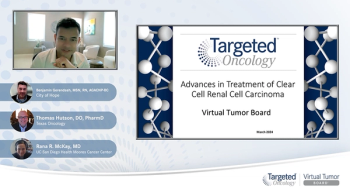
Sumanta Kumar Pal, MD, FASCO, reviews data from the TIVO-3 study investigating tivozanib in patients with advanced renal cell carcinoma, and the panel offers its impressions on the results.
Focusing on VEGF TKIs available for the treatment of patients with metastatic renal cell carcinoma, the panel discusses the goals of therapy in the third-line setting.
Binod Dhakal, MD, MS, discusses the potential risk of secondary cancers like lymphoma and leukemia sometimes seen with chimeric antigen receptor T-cell therapies.
Sanjay K. Juneja, MD, Targeted Oncology’s first 2024 Oncology Icon, delves into his background and what drove him to pursue a career in oncology.
Lova Sun, MD, MCSE, assistant professor at the Hospital of the University of Pennsylvania, discusses the important of next-generation sequencing for patients with thyroid cancer.
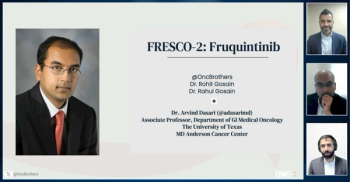
Arvind Dasari, MD, explores the adverse event profile of Fruquintinib, highlighting its apparent tolerability, while emphasizing the importance of gathering real-world data to further assess the adverse event profile of this medication in clinical practice.
Medical professionals provide background on the FRESCO-2 trial, which compared Fruquintinib to placebo in patients with heavily pretreated metastatic colorectal cancer. The trial enrolled patients who had exhausted all standard treatment options, including cytotoxic chemotherapy, targeted therapies, anti-VEGF agents, and BRAF inhibitors for those with BRAF mutations.
Arvind Dasari, MD, examines the progression-free survival and overall survival data from the FRESCO-2 trial, comparing the results to the original FRESCO trial, and discussing the implications for the treatment of heavily pretreated metastatic colorectal cancer patients.
Dr. Kuykendall provides his perspective on the biggest unmet needs with current advanced PV therapies, emerging data he is following that may impact future management, and any other clinical pearls for optimal PV management.
Dr. Kuykendall discusses the important quality of life aspects to consider when treating PV patients and the specific strategies or treatments he uses to help preserve overall QoL throughout the disease course.
Dr. Kuykendall explains how he monitors PV patients for thrombosis risk, which hematological values concern him most, and his approach if hematocrit rises above 45%.
Dr. Kuykendall shares his experience using peginterferon or ropeginterferon for PV treatment, including the biggest challenges, limitations, and managing safety/tolerability issues with these agents.
Dr. Kuykendall discusses the efficacy and safety findings from studies like MAJIC-PV and PROUD-PV, and how they influence his treatment choices for PV.
Dr. Kuykendall comments on the high rates of hematocrit control and spleen response with ruxolitinib vs standard therapy in the RESPONSE trial for hydroxyurea-resistant/intolerant PV, and how these efficacy findings inform his treatment choices.
Dr. Kuykendall explains the factors he considers when deciding on initial therapy for advanced PV patients, including comorbidities, individual patient factors like age and symptoms, and weighing the risks and benefits of different treatment options.
Dr. Kuykendall discusses his initial impressions of the case, how it compares to typical advanced polycythemia vera presentations, and typical risk factors seen in PV patients.
Dr. Bose shares his vision for the future management of patients with intermediate myelofibrosis, including the unmet needs with current treatment options and the emerging data he is closely following.
Dr. Bose discusses his perspective on quality-of-life preservation for his patients with myelofibrosis, including the symptoms that have the most negative impact on patients' quality of life.
Dr. Bose shares his perspective on how he monitors and manages anemia for patients on ruxolitinib, including when he would consider dose reduction or transfusion.
Dr. Bose discusses when he typically initiates ruxolitinib for his intermediate- or high-risk myelofibrosis patients.
Dr. Bose reviews the efficacy and safety findings from various studies on JAK inhibitors, including JAKARTA, PERSIST-1, PERSIST-2, SIMPLIFY-1 & 2, and MOMENTUM, and how these data inform his treatment choices.