
William Dale, MD, PhD, discusses the unmet needs of older patients requiring cancer treatment.

William Dale, MD, PhD, discusses the unmet needs of older patients requiring cancer treatment.
David Samuel Dicapua Siegel, MD, shared his perspectives on promising areas of research that could advance the care of patients with myeloma.
Manmeet Ahluwalia, MD, MBA, FASCO, discusses the takeaways from a study which examined the impact of various therapies, including combination treatments, for patients with metastatic renal cell carcinoma.
Mikkael A. Sekeres MD, MS, provides insight on the approval of imetelstat for treatment of adult patients with low- to intermediate-1 risk myelodysplastic syndromes with transfusion-dependent anemia.
John Mascarenhas, MD, discusses phase 3 of the SENTRY study evaluating the efficacy and safety of selinexor plus ruxolitinib in patients with JAK inhibitor treatment-naive myelofibrosis.
Holly Pederson, MD, and Elisha Hughes, PhD, discuss the findings and implications of a study evaluating risk of triple-negative breast cancer for Black women presented at the 2024 ASCO Annual Meeting.
Mazyar Shadman, discusses the mechanism of action of sonrotoclax and the phase 3 trial titled CELESTIAL-TNCLL, which is evaluating the agent for the treatment of patients with chronic lymphocytic leukemia.
Joseph Greer, PhD, discusses the late-breaking abstract from the 2024 ASCO Annual Meeting evaluating telehealth vs in-person palliative care for patients with advanced non-small cell lung cancer.
Minesh Mehta, MD, discusses positive findings from the phase 3 METIS trial investigating TTFields therapy for brain metastases in NSCLC.
Lynn Schuchter, MD, 2023-2024 ASCO president, discusses her top abstracts from the annual meeting.
Lori J. Wirth, MD, offers advice to oncologists using lenvatinib when treating patients with differentiated thyroid cancer.
As part of its Speaking Out series, Patrick Wagner, MD, discusses eligibility and considerations for oncolytic viral therapies.
Stacey Stein, MD, discusses the patient population and outcomes of the IMbrave150 trial of atezolizumab plus bevacizumab for patients with advanced hepatocellular carcinoma.
Yucai Wang, MD, PhD, discusses the rationale, methods, and design of a study evaluating the efficacy of pembrolizumab when given as both a monotherapy and in combination with B-cell receptor inhibitors for Richter transformation of CLL.

Downstream impacts of ruxolitinib in polycythemia vera treatment are illustrated by a panel of medical experts.
Tarah Ballinger, MD, discusses findings from the phase 2 EAZ171 study of taxane-induced peripheral neuropathy in Black patients with breast cancer.
Rebecca Shatsky, MD, discusses findings from the ISPY2.2 trial presented at the 2024 ASCO Annual Meeting.
Dr. Bose discusses the potential role of other treatment modalities, such as ruxolitinib combination therapies or novel agents, in managing this patient's myelofibrosis and anemia, including the emerging treatment options that may be relevant to this case.
Suresh Ramalingam, MD, principal investigator of the phase 3 LAURA trial, explains the study's evaluation of osimertinib in EGFR-mutated non-small cell lung cancer.

Shubham Pant, MD, discusses background on zanidatamab and findings from the HERIZON-BTC-01 trial of the agent for HER2-positive biliary tract cancer treatment.
Peter Borchmann, MD, discusses the main takeaways from the GHSG HD21 study presented at the 2024 ASCO Annual Meeting.
Puneeth Indurlal, MD, MS, discusses the implications of assessing for patients' health-related social needs during the course of cancer treatment at the 2024 ASCO Annual Meeting.

Vikram Narayan, MD, discusses the significance of the 5-year overall survival and cystectomy-free survival rates of nadofaragene firadenovec-vncg in treating patients with high-risk, BCG-unresponsive non-muscle invasive bladder cancer.
Dr. Bose discusses the potential adverse effects associated with ruxolitinib therapy and how they should be managed in this patient, with a focus on addressing the risk of anemia and other hematologic adverse effects.
Halle Moore, MD, discusses key takeaways from a study on young patients with breast cancer carrying BRCA mutations presented at the 2024 ASCO Annual Meeting.
Lori J. Wirth, MD, discusses some of the unmet needs that exist in the thyroid cancer space following the FDA approval for lenvatinib for radioactive iodine-refractory differentiated thyroid cancer.
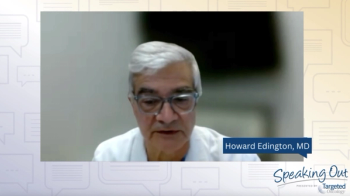
As part of its Speaking Out video series, Howard D. Edington, MD, explores how oncolytic viruses are revolutionizing personalized cancer therapy, the challenges of interpreting vast genetic data, and the exciting potential of these targeted therapies.
Dr Bose drives a discussion surrounding the treatment of advanced polycythemia vera.
The panel of experts dissect findings around breaking JAK inhibitor data in myelofibrosis treatment.

Guillermo Garcia-Manero, MD, discusses the design and outcomes of the phase 3 COMMANDS trial in patients with low-risk myelodysplastic syndromes.