





Prostate Cancer
Latest News
Advertisement
Latest Videos


















































Advertisement
More News

Shared insight on how expert oncologists select therapy for patients with nonmetastatic castration-resistant prostate cancer.

Expert perspectives on optimal patient follow-up, with particular regard for PSMA imaging, in nonmetastatic castration-resistant prostate cancer.

A discussion on the use of lutetium-PSMA-617 for prostate cancer treatment.

Experts in genitourinary oncology present data from the VISION clinical trial, studying patients with PSMA-positive metastatic castration-resistant prostate cancer.
Neal Shore, MD, FACS, discusses the purpose behind investigating enzalutamide in a cohort of patients with metastatic hormone-sensitive prostate cancer who were previously treated with local therapy as a post-hoc analysis of the ARCHES study.

During a live virtual event, Emmanuel S. Antonarakis, MD, discussed the VISION trial supporting the use of 177-lutetium-PSMA-617 for patients with metastatic castration-resistant prostate cancer. This is the second of 2 articles from this event.

Returning to the patient case, experts review available frontline treatment options in the setting of nonmetastatic castration-resistant prostate cancer.
A brief review of the prevalence of familial risk and other high-risk factors for prostate cancer, followed by recommendations for patient follow-up and genetic testing.

In an interview with Targeted Oncology, Adam Weiner, MD, discussed molecular subtyping for prostate cancer based on basal and luminal cell-of-origin and how such research may impact the future of this space.
During a live virtual event, Emmanuel S. Antonarakis, MD, discussed the results of the CARD trial of cabazitaxel for patients with metastatic castration-resistant prostate cancer. This is part 1 of 2 articles based on this event.
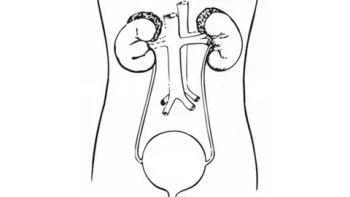
According to the phase 3 ATLAS trial, radiotherapy can be administered with next-generation hormonal therapy in phase 3 trials of patients with high-risk localized or locally advanced prostate cancer.

Reduced risk of metastatic progression and improved overall survival seen with darolutamide in patients with nonmetastatic castration-resistant prostate cancer.
Potential biomarkers of overall survival outcomes have been identified in an exploratory post-hoc analysis of the phase 3 TITAN trial.

Enzalutamide showed continued overall survival benefit in patients with metastatic hormone-sensitive prostate cancer after over 5 years of follow-up.
RV001 did not show superiority to placebo in terms of preventing progression of disease in patient with prostate cancer.
In an interview with Targeted Oncology, William J. Catalona, MD, reviewed the history of active surveillance in the prostate cancer space and how the practice has become more widespread in the United States.
Patients were diagnosed with prostate cancer at the expected average age with a majority of individuals diagnosed with stage 1 or 2 disease, and a significant minority presented with metastases.
In an interview with Targeted Oncology, Neal Shore, MD, FACS, discussed the use of enzalutamide plus androgen deprivation therapy in metastatic hormone sensitive prostate cancer and how post-hoc findings from the ARCHES study can be applied to practice.

IS-002 was shown to be safe, well-tolerated, and allow for enhanced intraoperative tumor detection in patients undergoing robotic prostatectomy, according to findings from a phase 1 study.
Darolutamide plus androgen deprivation therapy and docetaxel was not associated with an increase in incidence or severity of adverse events versus androgen deprivation therapy plus docetaxel in patients with metastatic hormone-sensitive prostate cancer.
Data supporting prostate-specific antigen screening shows harm-benefit tradeoff to be more favorable with complementary approaches to quantifying overdiagnosis.
The safety profile of relugolix in patients with advanced prostate cancer has been demonstrated in the phase 3 HERO clinical trial.
Results from a post-hoc analysis of ARCHES showed that the enzalutamide plus ADT significantly improved survival, as well as key secondary end points, compared with placebo plus ADT in patients with metastatic hormone-sensitive prostate cancer.
Findings from a post-hoc analysis of the phase 3 ARAMIS clinical trial shows positive efficacy and consistent safety and tolerability with darolutamide in patients with nonmetastatic castration resistant prostate cancer, despite type of prior local therapy.
Patients with metastatic castration-resistant prostate cancer treated with darolutamide for more than 4 years tolerated well the adverse effects of the drug.
Advertisement
Advertisement
Trending on Targeted Oncology - Immunotherapy, Biomarkers, and Cancer Pathways
1
Plinabulin Receives FDA Fast Track Designation in Post-ICI NSCLC
2
Denosumab Biosimilar Approved For Existing Oncology Indications
3
FDA Oncology Recap: Approvals, Designations, and Decisions in September 2026
4
Tile-Based Radiation Improves Local Control in Resected Brain Metastases
5