

In an interview with Targeted Oncology, Bradley Monk, MD, FACCOG, FACS, discusses the OUTBACK trial, including the results, strengths, and challenges.

In an interview with Targeted Oncology, Bradley Monk, MD, FACCOG, FACS, discusses the OUTBACK trial, including the results, strengths, and challenges.

Based on a review of immune checkpoint inhibitor mechanisms of action and clinical trial data, SITC has published a clinical practice guideline, which provides key recommendations for managing immune-related adverse events.
The FDA has approved the combination of lenvatinib and pembrolizumab for the treatment of patients with advanced endometrial cancer that is not microsatellite instability–high or mismatch repair deficient, who have disease progression following prior systemic treatment and who are not candidates for curative surgery or radiation.
Debu Tripathy, MD, discusses the use of tucatinib, capecitabine, and trastuzumab for the treatment of patients with HER2-positive breast cancer and leptomeningeal disease in other HER2-positive cancer types.

Adjuvant treatment with atezolizumab led to a significant improvement in disease-free survival versus supportive care in patients with PD-L1–positive non–small cell lung cancer.

The UriFind test that utilizes DNA methylation detection for the diagnosis of bladder cancer has been granted a breakthrough device designation by the FDA.
The FDA has granted an orphan drug designation to alrizomadlin, an MDM2-p53 inhibitor, for the treatment of stage 2b to 4 melanoma.
The FDA has granted breakthrough therapy designation to the combination of venetoclax and azacitidine for the treatment of adult patients with previously untreated intermediate-, high- and very high-risk myelodysplastic syndromes.
American Oncology Network, LLC recently announced the appointment of James Gilmore, PharmD, as the organization’s Chief Pharmacy & Procurement Officer.

Eric Nadler, MD, MPP, discusses the real-world patient characteristics and treatment duration of the immunotherapy combination treatment studied in the IMpower133 trial in extensive-stage small cell lung cancer.

Paolo Ghia, MD, PhD, of the Università Vita-Salute San Raffaele, discusses the safety profile of ibrutinib plus venetoclax in patients with chronic lymphocytic leukemia.

The first patient has been dosed in the phase 1/2a clinical trial, designed to evaluate LAVA-051- a gamma-delta bispecific gamma-delta T cell engager that activates Vγ9Vδ2 T cells and type 1 natural killer T cells-in those with chronic lymphocytic leukemia, multiple myeloma, and acute myeloid leukemia.
The Fox Chase Cancer Center at Temple University in Philadelphia, Pennsylvania has been added as an active trial site by Salarius Pharmaceuticals, Inc. for the ongoing trial of seclidemstat for the treatment of relapsed or refractory Ewing sarcoma and advanced FET-rearranged sarcomas.

A network meta-analysis looking at 4 studies that assessed atezolizumab/bevacizumab compared to lenvatinib showed there was not a statistically significant improvement for patients with unresectable hepatocellular carcinoma.
Ghassan K. Abou-Alfa, MD, a medical oncologist at Memorial Sloan Kettering Cancer Center, discusses tiselizumab’s mechanism of action in patients with hepatocellular carcinoma.
In an interview with Targeted Oncology, HEPANOVA EF-30 investigator, Eleni Gikka, MD, provided insight into the use of TTFields in combination with standard of care therapy for patients with advanced hepatocellular carcinoma.
FDA approval has been granted approval to belumosudil for the treatment of adult and pediatric patients 12 years and older with chronic graft-versus-host disease after failure of at least two prior lines of systemic therapy.
The combination of the ant-PD-1 inhibitor, pembrolizumab plus chemotherapy before surgery continued by pembrolizumab as a single agent led to statistically significant event-free survival result versus neoadjuvant chemotherapy alone in patients with high-risk early-stage triple-negative breast cancer.

The real-world treatment patterns for patients with advanced non–small cell lung cancer harboring EGFR exon 20 insertions are diverse, according to a retrospective observational study, and underscore an unmet need for better treatment options for this patient population.
The investigational anti-TIGIT agent, COM902, has been administered to a patient for the first time as part of a phase 1 clinical trial evaluating COM902 in combination with the anti-PVRIG agent, COM701 in patients with advanced malignancies who have no alternative treatment options.
In an interview with Targeted Oncology, Stephanie Lee, MD, MPH, reviewed the updated data from the REACH3 trial along with the efficacy of ruxolitinib in the greater chronic graft versus host disease population.
The FDA has lifted its partial clinical hold on a phase 1B study of RVU120, which is an investigation of the agent for the treatment of patients with relapsed or refractory acute myeloid leukemia and high-risk myelodysplastic syndrome.
In season 2, episode 6 of Targeted Talks, Dr. Michael J. Overman, joins Targeted Oncology for a special discussion around rare genomic alterations in colorectal cancer
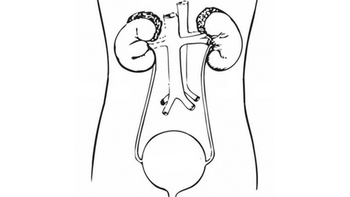
A study has shown that Ga-68 PSMA PET imaging predicted lymph node invasion in patients with prostate cancer at a higher specificity and higher positive predictive value compared with 3 nomograms at predicting lymph node invasion.

Gilles Salles, MD, the lymphoma service chief at Memorial Sloan Kettering Cancer Center discusses the safety profile of tafasitamab combined with lenalidomide for the treatment of relapsed or refractory diffuse large B-cell lymphoma, based on results of the L-MIND trial.
In a draft guidance for clinical investigators and sponsors, the FDA made recommendations on how to expand eligibility to patients with incurable cancer through clinical trial designs of investigational cancer drugs and biological products.
The American Society of Clinical Oncology and the Community Oncology Alliance released new Oncology Medical Home standards that are designed to help guide care providers as they treat patients.
In an interview with Targeted Oncology, Rachel N. Grisham, MD, discussed binimetinib’s effect on patients with ovarian cancer harboring a KRAS mutation.

Encouraging findings from an ongoing phase 1 trial evaluating an off-the-shelf, allogeneic CD30-CAR Epstein Barr virus–specific T-cell therapy, evaluated in patients with lymphoma.
A significant increase in the risk of disease recurrence among patients with high level of the nicotine metabolite, urinary cotinine, who had non–muscle invasive bladder cancer and were smokers.