Tanios S. Bekaii-Saab, MD, FACP, discusses the patient population, methods, and design utilized in the phase 3 MOUNTAINEER-03 study.

Tanios S. Bekaii-Saab, MD, FACP, discusses the patient population, methods, and design utilized in the phase 3 MOUNTAINEER-03 study.

Joshua K. Sabari, MD, discusses the shortage of carboplatin, its impacts, and how oncologist can still treat patients.
Joshua K. Sabari, MD, explains how the shortage of drugs in the oncology space, including carboplatin and cisplatin, began.

Rupesh Kotecha, MD, discusses the key findings from an analysis centered around the use of pulse reduced dose rate intensity-modulated radiotherapy in patients with central nervous system malignancies.
Melissa Alsina, MD cites recent data from ongoing studies as well as highlights remaining questions and unmet needs in the NDMM landscape.
An overview of prominent toxicities observed in patients receiving treatment for NDMM and standard countermeasures to address them, with a focus on neuropathy.
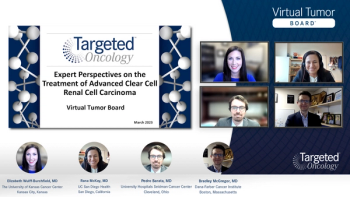
A panel of experts on renal cell carcinoma discuss triplet therapy and review COSMIC-313, a study of cabozantinib, nivolumab, and ipilimumab in the first line.
Expert oncologists discuss the management of immune-related adverse events in renal cell carcinoma.

Thomas Flaig, MD, discusses recent updates seen in the bladder cancer space and how they have led to changes to the NCCN guidelines.

Qian Wang, MD, MPH, looks at the important metrics related to a patient’s smoking history that helps to determine their level of risk for developing small cell lung cancer.
Adam Brufsky, MD, PhD, FACP, discusses background and previous clinical data on palbociclib as a treatment option for patients with estrogen receptor-positive, HER2-negative, advanced breast cancer.
Tanya Dorff, MD, discusses the main findings from a phase 1 study of patients with metastatic castration-resistant prostate cancer.
Prerna Mewawalla, MD, a hematologist at Allegheny Health Network, discusses how her approaches to patients with newly diagnosed multiple myeloma have changed recently based on clinical trial outcomes.
Tycel Phillips, MD, discusses the results from the practice-changing EPCORE NHL-1 study.
Dr Alsina describes key findings from the post-hoc analysis of the SWOG S0777 trial and explains how they inform treatment strategies for elderly patients.
A subject-matter-expert reviews updated efficacy results and subgroup analyses from the MAIA trial, evaluating D-Rd for transplant-not preferred NDMM.

Hun Ju Lee, MD, discusses the early results of the dose finding and safety study of zilovertamab plus ibrutinib for patients with mantle cell lymphoma as well as chronic lymphocytic leukemia and marginal zone lymphoma.
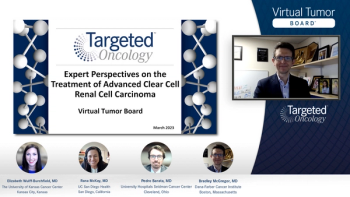
An overview of adverse event and toxicity considerations with TKI therapies in renal cell carcinoma.
Expert oncologists review data updates on IO-IO regimens in the treatment of advanced RCC, including CheckMate 214, and discuss treatment selection among IO-IO and IO-TKI combinations.
Matthew Matasar, MD, discusses the development of mosunetuzumab and how it is a positive step forward in the field of follicular lymphoma treatment.
John P. Diaz, MD, discusses how meetings on gynecologic oncology provide advantages for everyday physicians to keep track of the latest updates on the treatment landscape.

Arash Rezazadeh Kalebasty, MD, discusses the dose modification impact of the addition of darolutamide for patients with metastatic hormone sensitive prostate cancer.

Tycel Phillips, MD, discusses the impact of the recent approval of subcutaneous epcoritamab for the treatment of patients with relapsed/refractory diffuse large B-cell lymphoma after 2 or more lines of systemic therapy.

Bruno Bockorny, MD, discusses the phase 1 C-800 trial of botensilimab plus bastilimab, specifically for patients in the C-800-01 cohort with recurrent platinum refractory/resistant ovarian cancer.

Following their discussion of the EMERALD trial and elacestrant with Virginia Kaklamani, MD, DSc, the Oncology Brothers share clinical implications of the EMERALD trial to practice and look toward the future of ER+, HER2- advanced breast cancer management.

Expert oncologist Virginia Kaklamani, MD, DSc, joins the Oncology Brothers in highlighting the efficacy and safety data from the EMERALD trial and identifying appropriate use of elacestrant in patients with ER+, HER2- advanced breast cancer.
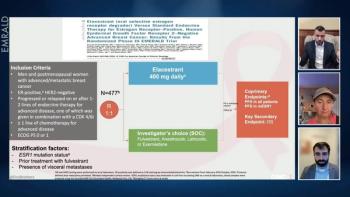
The Oncology Brothers are joined by Virginia Kaklamani, MD, DSc, who provides an overview of the EMERALD trial design and use of elacestrant in ER+, HER2- advanced breast cancer.
Jonathan W. Goldman, MD, discusses management of the most common adverse events associated with osimertinib in patients with non–small cell lung cancer.
Liza C. Villaruz, MD, discusses the latest areas of growth in the non–small cell lung cancer space.
Dr Alsina outlines criteria used in determining transplant eligibility and her approach to assessing standard risk versus high-risk in patients with NDMM.