


COMMUNITY ONCOLOGY PRACTICE
Latest News
Advertisement
Latest Videos
Shorts
0:35
Helping Oncologists Cut Through the Data Overload
a month ago
by
Shaalan Beg, MD, MBA, FASCO
0:43
Agentic AI: Turning Fragmented Patient Data Into Clinical Trial Matches
a month ago
by
Shaalan Beg, MD, MBA, FASCO
0:49
Proactive Supportive Care Is Key With Bispecific Therapy
2 months ago
by
Natasha Edwin, MD
0:58
Why General-Purpose AI Doesn’t Cut It for Oncology
2 months ago
by
Shaalan Beg, MD, MBA, FASCO
0:35
Tocilizumab May Ease Bispecific Uptake in Community Practice
2 months ago
by
Natasha Edwin, MD
0:46
Can Operations Keep Pace With Oncology’s Outpatient Expansion?
2 months ago
by
Donna Berizzi, RN, DNP, OCN, NEA-BC
0:54
The Growing Case for ePROs in Community Oncology
2 months ago
by
Debra Patt, MD, PhD, MBA
0:41
OncoPRO Helps Practices Navigate ePRO Adoption
2 months ago
by
Debra Patt, MD, PhD, MBA
0:36
ePRO Monitoring: Earlier Intervention, Fewer Hospitalizations
2 months ago
by
Debra Patt, MD, PhD, MBA
0:35
GLP-1s Linked to 34% Lower Cancer Mortality Rate
2 months ago
by
Jess Paulus, ScD





































Advertisement
More News
Virtual behavioral health embedded in community oncology boosts access for Black patients and patients on Medicaid, easing distress and improving quality of life.
Genetic testing isn’t the finish line—learn how evolving risk models, dense breast guidance, and MCED screening may transform early cancer detection.
Community oncology prepares for routine genetic testing, building workflows, training and follow-up to expand hereditary cancer risk care and reduce disparities.
Ranjit Goudar, MD explains how community oncology practices are expanding hereditary cancer care through genetic testing, workflow redesign, and personalized prevention strategies.
Learn how 505(b)(2) oncology drugs ease shortages and what billing, coding, and workflow steps cancer centers need for safe adoption.
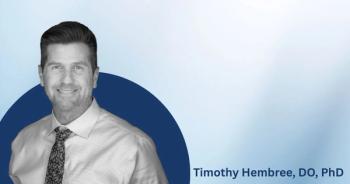
Timothy Hembree, DO, PhD, discusses how patients and physicians have benefited from an AI-supported virtual care system implemented at Moffitt Cancer Center.
Allostatic load links chronic stress and social factors to early-onset cancer risk, offering a measurable path to improve risk models and prevention strategies.
ASCO 2026 data link chronic-stress allostatic load to higher early-onset cancer risk, suggesting new tools for screening beyond genetics.
APP-led benign hematology consults boost access in community oncology—cut wait times, expand capacity, and show how teams scale safely.
FDA opens expanded access to daraxonrasib for metastatic pancreatic cancer, as phase 3 data boost survival and clinics race to manage access hurdles.
Early study data show community oncology matches or beats hospital cancer outcomes at lower cost, boosting local access, better experience, and payment reform calls.
Ohio State’s BRIDGE program coordinates age-tailored cancer care, tackling fertility, careers, and research gaps to transform outcomes for AYA patients.
A new program for young cancer patients breaks disease silos, showing how multidisciplinary teamwork improves coordination, insights, and care.
Ohio State’s BRIDGE model unites research, wraparound care, digital tools and support services to improve outcomes in early-onset cancers.
Ohio State’s BRIDGE Program targets early-onset and AYA cancers, adding fertility, financial, and psychosocial support alongside specialists.
AACR data suggest 60% of early-onset cancers could be found with existing tests, prompting calls for earlier, risk-based screening.
Community oncology teams partner with health systems to deliver advanced therapies safely, using hybrid dosing, toxicity backup, and local follow-up.
How community oncology prepares for CAR T and gene therapy: safety gains, tech, payer shifts, and 3 must-have capabilities to expand access.
Persistent itch can signal serious immunotherapy skin toxicity; learn triage tips, risk factors, and when to refer to dermatology fast.

Real-world data show community oncology care links to longer survival in metastatic breast cancer and NSCLC, beating national benchmarks.
Study finds Gemini and GPT catch oncology chart errors, improving documentation accuracy and patient safety with clinician oversight.
Advanced genomic profiling in community oncology uncovers actionable cancer mutations and trial options—yet insurance denials still block access.
Nearly 60% of under-50 cancers are screen-detectable; Ohio State’s BRIDGE program coordinates care, research, and support for younger adults.
Why oncology telehealth stalls: patients cite platform anxiety, few video offers, and in-person trust—pointing to hybrid care.
Discover ways to detect early-onset cancers sooner, avoid age bias, and coordinate multidisciplinary care, fertility, genetics, and support.
Advertisement
Advertisement
Trending on Targeted Oncology - Immunotherapy, Biomarkers, and Cancer Pathways
1
Aglatimagene Boosts Immune Infiltration in Localized Prostate Cancer
2
Epcoritamab Plus R-CHOP Improves PFS in Newly Diagnosed DLBCL
3
Rinatabart Sesutecan Shows Durable Responses in Platinum-Resistant Ovarian Cancer
4
Phase 3 Trial of Daraxonrasib Plus Zoldonrasib Begins in RAS G12D PDAC
5